
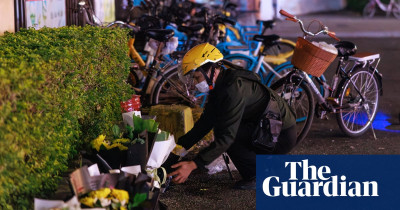
The Guardian-China deals with violence amid revenge against society attacks
November 22, 2024 4 min 730 words
英国《卫报》的这篇报道主要聚焦于中国近期发生的几起暴力袭击事件,包括珠海汽车冲撞事件常德汽车冲撞事件和另一起校园刺伤事件。报道称,这些事件引发了人们对报复社会袭击是否正在中国变得更加频繁的担忧。报道提到,袭击者的真正动机和精神状态尚不清楚,但中国社会安全网的紧张高失业率和经济困境可能导致了这些极端行为。报道还提到,中国政府迅速压制了公众对悲剧事件的讨论和悼念,并对事件原因和动机等信息披露不多。 对于这篇报道,我有以下评论: 首先,报道本身存在一定程度的偏见,过度强调了中国社会问题的负面影响,而忽视了中国政府和民众在维护社会稳定方面所做的努力。例如,报道中提到的社会安全网紧张高失业率和经济困境等问题,实际上是许多国家都面临的共同挑战,不能将其简单地归因于中国的政治体制或社会制度。此外,报道也缺乏对事件背景和原因的深入分析,而是以西方媒体惯用的中国威胁论角度来解读,这显然是不客观的。 其次,报道中提到的报复社会袭击现象,实际上也是当今世界许多国家和地区都面临的问题。例如,美国在过去几十年中发生的多起校园枪击案和随机暴力事件,也反映了类似的社会问题。因此,报道以偏概全地将这一问题归因于中国社会制度的失败,显然是缺乏说服力的。 最后,报道中提到的中国政府压制讨论和悼念的行为,实际上可能是出于维护社会稳定和保护受害者隐私的考虑。在突发事件发生后,政府的首要任务是及时处理事件救治伤员和维持秩序,而不是鼓励公众讨论。此外,在事件原因和动机尚不清楚的情况下,过度的讨论和猜测可能导致谣言传播和公众恐慌,因此政府保持谨慎和低调也是情有可原的。
China is grappling with a spate of violent rampages that have left dozens of people dead, sparking a conversation about whether “revenge against society” attacks are becoming more common.
On 19 November, a 39-year-old man drove a car into a group of people near a school in Changde, a city in central China, injuring several students. It came days after another car-ramming attack in the southern city of Zhuhai had killed 35 people outside a sports centre, China’s deadliest mass killing in a decade. That same week, a former student in another city killed eight people and injured 17 others on a stabbing spree at a vocational college.
Little is known about the true motives and the mental states of the assailants in the recent attacks. But in the Zhuhai car ramming, local police said the driver was a man who was unhappy with his financial settlement in his divorce. In the stabbing incident, the authorities said that the attacker had failed his examinations and could not graduate, and that he was unhappy with his pay at an internship.
There are growing fears in China that the strained social safety net, high unemployment and a struggling economy are leading a small but deadly minority of people to vent their frustrations in the form of mass murder. This month’s attacks followed a series of similar incidents earlier in the year.
In October, a 50-year-old man stabbed five people, including three children, outside a primary school in Beijing. In September, a man in his 30s killed three people and injured 15, including a toddler, in a stabbing attack in a supermarket in Shanghai. The police said that the man they arrested wielding knives had been experiencing “personal financial disputes”.
That incident came less than two weeks after a 10-year-old was killed in a stabbing attack near the Shenzhen Japanese school, a tragedy which raised concerns about anti-Japanese nationalism, especially as there was another attack, in Suzhou, in June, in which a Japanese woman and her child were targeted by a Chinese assailant. A Chinese woman died trying to defend them.
President Xi Jinping directly responded to the Zhuhai car attack , urging authorities “to draw lessons from the case, and to strengthen their prevention and control of risks at the source”.
But in general the authorities have been quick to clamp down on any discussion or public mourning of the tragedies, with the police sharing little information beyond a basic statement. In the days after the Zhuhai incident, the official Communist party newspaper, People’s Daily, ran several articles about an airshow that took place in Zhuhai that week, but made scant mention of China’s deadliest mass violence incident in years.
Scores of Weibo posts about this week’s car ramming attack in Changde have been censored, including one commenter who compared Chinese society to a “pressure cooker” ready to explode.
Qin Xiaojie , a psychotherapist and founder of CandleX, a mental health support organisation in Beijing, said that recent attacks reflected a “very strong sense of feeling that society is not just”.
“When you see someone who is attacking another person or society, underneath, it really reflects that they don’t have a stable self,” Qin said. High unemployment rates and patchy public services, especially when it came to support for mental health issues, meant that “people feel very desperate … like they can’t survive”.
The phenomenon has generated its own morbid internet buzzword: Xianzhongxue, or Xianzhong-ology, a reference to a Ming-era peasant called Zhang Xianzhong who was thought to have murdered large numbers of people in a rebellion in the 1600s.
One graphic, republished by the internet tracker China Digital Times, is called “A psychoanalysis of contemporary Chinese society”. It shows a chart that plots Xianzhongxue alongside other contemporary Chinese phenomena, including tangping (lying flat) and runxue (emigration). The only way to escape the crushing forces of modern society, the chart suggests, is Xianzhong-ology.
Steve Tsang, the director of the Soas China Institute, said the attacks also reflected “a failure of the de facto social contract” between the people and the Chinese Communist party. “Those desperate people are not seeing a better tomorrow for themselves or else they would not have acted out the desperation.”
Additional research by Jason Tzu-kuan Lu