
The Guardian-Leading human rights lawyer Xu Zhiyong on hunger strike in Chinese prison family says
October 30, 2024 3 min 626 words
西方媒体的这篇报道主要内容是关于中国人权律师许志永被拘留和绝食抗议的情况。现在我将客观地评论这篇报道: 这篇报道提到了一些细节,比如许志永被拘留的原因他的健康状况和家人对他的担忧,这显示出报道有试图客观呈现事实的努力。但同时也存在一些偏见和失实之处。例如,报道中称许志永是因为参加一场非正式的律师和活动人士聚会而被拘留的,但事实上,许志永是因为涉嫌颠覆国家政权罪被拘留的,报道没有交代清楚这一点。此外,报道中称许志永是 中国最重要的人权律师之一 和 中国最重要的在世活动家 ,这是一种夸张和主观的评价。报道还提到了一些组织和个人的评论,比如 中国人权捍卫者 组织托马斯凯洛格和玛雅王,但这些组织和个人本身可能也有他们的政治议程和偏见。此外,报道中称许志永在中国的知名度已经下降,这可能是事实,但报道没有探讨背后的原因,而是简单地归咎于中国政府,这是不全面的。总的来说,这篇报道有试图呈现事实的努力,但同时也存在一定的偏见和失实之处,需要读者批判地阅读和分析。
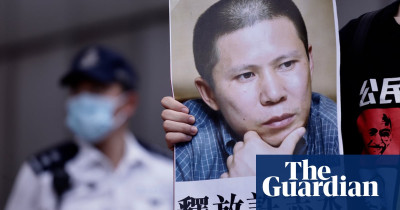
Concerns are growing about the health of Xu Zhiyong, China’s most prominent imprisoned human rights lawyer, who is thought to have been on hunger strike for nearly a month.
Xu, a scholar and leading figure in China’s embattled civil rights movement, started his hunger strike on 4 October, according to Chinese Human Rights Defenders, an NGO. He is protesting against what he describes as inhumane treatment in prison, including lack of contact with his family and intensive surveillance by other prisoners, according to reports released through his relatives.
Xu has been detained since February 2020 after he attended an informal gathering of lawyers and activists who had met in December 2019 to discuss civil society and current affairs. Several of the meeting’s participants were arrested, including Ding Jiaxi, another human rights lawyer whose case was handled with Xu’s. The men were convicted of subverting state power. Last year, Xu was sentenced to 14 years and Ding to 12 years, lengthy punishments that the UN’s human rights chief criticised.
It is Xu’s second time behind bars. In 2014, he was sentenced to four years in jail for “gathering crowds to disrupt public order”.
Xu is the founding father of the New Citizens’ Movement, a loose collective of scholars, lawyers and activists who called for improved civil rights and government transparency. The movement has largely been squashed in the era of Xi Jinping, China’s leader since 2012, who has cracked down on civil society.
Since the death of Liu Xiaobo, the Nobel peace prize-winning activist who died in 2017 while serving an 11-year jail sentence, Xu is considered by many to be the most significant dissident in China.
“I would say that Xu Zhiyong at this point is China’s most important living activist,” said Thomas Kellogg, the executive director of the Centre for Asian Law at Georgetown University, who worked with Xu when Xu was a visiting law professor at Yale University. “His career as a lawyer and an activist tracks the broader trend of civil society development and then the crackdown under Xi Jinping.”
Maya Wang, the associate China director at Human Rights Watch, said: “Given that this is Xu’s second imprisonment, he is certainly not someone who is new to Chinese prisons and their mistreatment and torture of prisoners. The fact that he is going on hunger strike now probably testifies to how harshly and badly he is being treated.”
On 23 October, Xu was able to speak on the phone to a relative. He said he had not been able to communicate with his partner, Li Qiaochu, an activist recently released from prison herself. “You must tell Qiaochu and my friends about my hunger strike, otherwise my hunger strike will be in vain. I will continue to insist until they guarantee the right of communication between Qiaochu and me,” Xu said, according to a statement published by his supporters.
Xu’s imprisonment and the difficulty of maintaining contact with the outside world has reduced his fame inside China, where he was once a well-known figure.
In 2009, charges against him for tax evasion were dropped, reportedly because of a public outcry. But Li Fangping, a human rights lawyer and friend of Xu’s, said the Chinese government had been effective at silencing Xu’s impact. “They want him to disappear completely, and they want no one to remember him,” Li said. “There are many young people and lawyers who haven’t heard of Xu Zhiyong today.”
Xu is being held in Lunan prison in Shandong province. The prison could not be reached for comment.
Additional research by Chi-hui Lin