
The Washington Post-The desperate alignment of Russia China Iran and North Korea
April 17, 2024 6 min 1153 words
这篇报道主要内容是,美国官员称,伊朗与俄罗斯达成战略联盟,从俄罗斯购买武器,以加强对以色列的防御,并认为这是俄罗斯入侵乌克兰并大量使用伊朗制造的无人机所致。报道还提到俄罗斯与朝鲜之间的交易,以及中国在西方制裁下为俄罗斯提供贸易生命线。美国官员称,中国向俄罗斯出口导弹坦克和飞机等技术,这超出了正常的商业范围。文章认为,伊朗俄罗斯朝鲜和中国与其他国家和组织(如哈马斯和胡塞叛军)一起,似乎组成了反对西方的联盟,被一些西方官员称为新的“邪恶轴心”。然而,文章也承认,将这一联盟简单地视为“邪恶轴心2.0”是错误的,因为这些国家在意识形态和实际国情上存在差异和张力。 评论:这篇报道带有明显的偏见,试图将俄罗斯中国伊朗和朝鲜描绘成一个统一的反西方联盟,并使用“邪恶轴心”这样的标签来煽动情绪。但实际上,这些国家虽然在某些方面有合作,但各自有不同的利益和目标,国情和意识形态也存在差异。报道过度强调了它们的统一性,而忽视了它们之间存在的紧张关系和分歧。此外,报道也忽视了西方国家本身在应对全球挑战方面存在的分歧,比如在如何应对中国崛起的问题上,美国和欧洲盟友之间就有不同意见。报道还忽略了中国和俄罗斯在国际组织中发挥的积极作用,比如在联合国安理会中,中俄在包括军控在内的多个议题上发挥了建设性作用。报道过于简单化地将世界分为“西方阵营”和“反西方阵营”,这并不符合当今世界的复杂现实。
2024-04-16T16:06:43.983Z
You’re reading an excerpt from the Today’s WorldView newsletter. Sign up to get the rest free, including news from around the globe and interesting ideas and opinions to know, sent to your inbox every weekday.
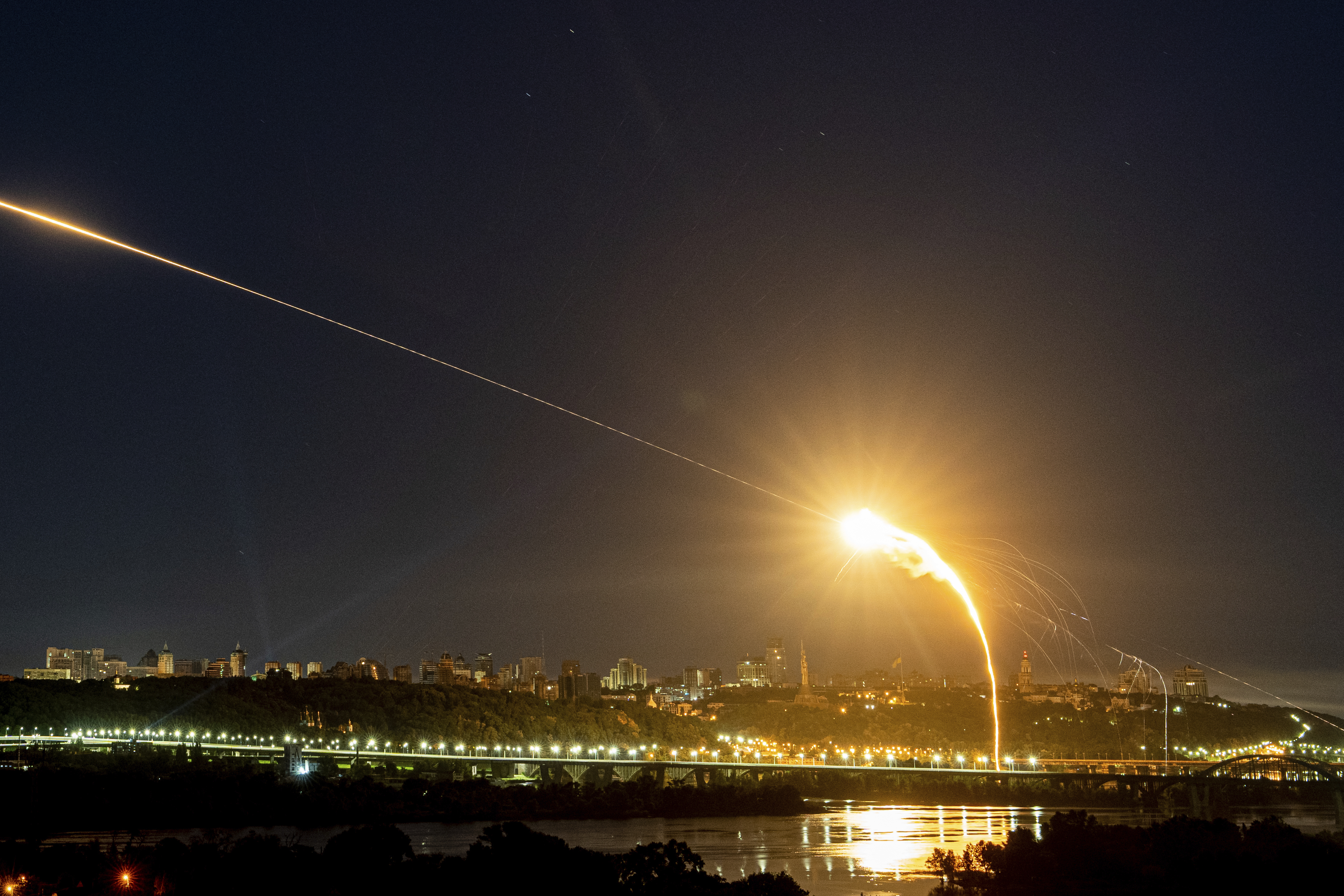
It is increasingly common in Washington to view the various conflicts around the world as part of one big narrative. That is hardly without reason. As The Washington Post reported this week, U.S. officials say Iran has bolstered its defenses against a potential retaliatory strike by Israel with the purchase of Russian weapons, part of a strategic alliance forged by Kremlin’s invasion of Ukraine in 2022 and the extensive use of Iranian-manufactured drones there.
Moscow hasn’t just been looking to Tehran for a mutually beneficial relationship. Last year, Russian President Vladimir Putin traveled to North Korea to meet with that nation’s reclusive leader, Kim Jong Un, and cement a deal that gave Russian troops much-needed ammunition and other war materials in exchange for more advanced technology coveted by Pyongyang.
But the most significant partner by far in this convergence is China, which provided a trade lifeline for Russia amid Western sanctions. U.S. officials told the Associated Press last week that much of this support goes beyond regular business, however, with China surging exports of technology that Russia can use to produce missiles, tanks and planes — making up for both battlefield losses and export controls by the United States and its allies.
Iran, Russia, North Korea and China are part of a far broader group of nations and movements — among their ranks include the relatively small but influential groups like Hamas and the Houthis — that seem to be opposed to the West. Some Western officials, including Senate Minority Leader Mitch McConnell (R-Ky.), have repeatedly suggested these countries mark a new “axis of evil” — a reference to a phrase infamously used by President George W. Bush at the start of the war on terror.
The man who coined that phrase apparently sees this new alliance as even broader. “The world faces a global alignment of dictators, thugs and aggressors, from Tehran to Moscow to Beijing to Palm Beach,” David Frum, the former White House speechwriter, said on X this week after Iran’s failed attack on Israel — the last item on his list, a reference to Florida man and former president Donald Trump.
It’s flawed to view this as simply an “axis of evil 2.0,” however. That’s partly because the original idea was a stretch at best. Two of the three countries in the original “axis,” Iran and Iraq, were helmed by diametrically opposed ideologies at that point — the former led by a Shiite theocracy, the other a Pan-Arab nationalism led by Sunnis — who had not long before fought a bloody, brutal war. The final nation, the totalitarian socialist state North Korea, was literally and figuratively half a world away.
The new alignment is similarly misaligned. Russia’s state capitalist society may ally itself with domestic religious forces like the powerful Russian Orthodox Church, but it has little overlap with the Islamic doctrine espoused by Ayatollah Ali Khamenei or its sectarian Shiite allies. While China and North Korea both espouse socialist forms of government, the official rhetoric and practical implementation of these ideologies in the two nations is significantly different. Even in recent history, they have found themselves at points of tension.
This means that unlike the Cold War, where ideology at least nominally bound the Communist bloc against the West, what we have now is better understood as a “marriage of convenience” between a number of disparate nations.
That doesn’t mean it will end in divorce, however. What’s driving these agreements is not just convenience, but also desperation. Sanctions and export controls have pushed Russia — which once enjoyed booming trade with Europe and the United States despite tensions — to turn to China, even if the trade relationship is clearly unfavorable. While none of the nations can stand up to America’s military might, they all have individual strengths that the others hope to learn from.
To put it another way: If Putin wants to keep fighting his war in Ukraine and survive punishing economic isolation from the Western-led global economic order, he has little option but to turn east to China. If China views the future of the global order as a great power battle between itself and the United States, it needs all of the help it can muster — and Russia’s rich natural resources and some of its military technology will be of big aid here.
Desperation can drive dangerous situations. Two of the four in this alignment are undeniably powerful nations, while the two smaller nations — Iran and North Korea — have considerable capabilities of their own, most notably including Tehran’s network of aligned movements in the Middle East.
Three of the four are nuclear-armed; Iran is not far off. As permanent members of the U.N. Security Council, China and Russia both played constructive roles in setting norms before, including on arms control measures for both Iran and North Korea. Without them, those efforts are foundering.
At the same time, the West faces its own misalignment. The United States is painfully divided internally on Russia for domestic political reasons, while Trump — seeking a return to office next year — has repeatedly suggested he seeks to pull out of the NATO military alliance. The former president and some of his supporters favor a brokered end to the war in Ukraine that would break the Russia-China alliance, though analysts say this would do little to dent a relationship cemented by mutual interests.
“Any hopes of peeling them away from each other are nothing more than wishful thinking,” Alexander Gabuev, director of the Carnegie Russia Eurasia Center, wrote recently.
U.S. allies in Europe, for obvious historical reasons, have long taken the threat of Russia seriously but have only recently begun to align with China hawks in Washington. But even these hawks are divided among themselves about how hard to fight the threat of a rising China. “If Beijing judges we are pursuing total victory over it, what is the downside to going all the way in its fight with us?” Elbridge Colby, a former Defense Department official, wrote on X this weekend, responding to a Foreign Affairs article by former Trump White House official Matt Pottinger and Rep. Mike Gallagher (R-Wis.) that called for a “long term victory” over China.
The United States was able to rally an impressive alliance that included traditional allies like Britain as well as Gulf states to help defend Israel from Iranian assault this weekend. But the war in Gaza not only continues to create a toxic divide within these allies, but also breeds animosity among the Global South that both sides would seek to court.