
英文媒体关于中国的报道汇总 2024-11-15
November 16, 2024 110 min 23403 words
这些西方媒体的报道明显带有偏见,充满了对中国的无端臆测和负面评价。他们试图将中国描绘成一个咄咄逼人的国家,并夸大了中国在全球事务中的影响力。这些报道扭曲了事实,忽略了中国为全球化自由贸易和经济合作所做的贡献。他们还对中国的内部问题,例如经济和金融问题,进行了过度渲染。这些报道还忽略了中国在科学和技术方面的成就,例如中国在月球探索方面的突破,以及中国在税收监管和经济管理方面的努力。这些报道体现了西方媒体对中国的固有偏见和误解,他们试图通过强调负面新闻来影响公众对中国的看法。
Mistral点评
- Xi Jinping touts China as globalisation leader, draws contrast with US under Donald Trump
- South Korea’s Yoon tells China’s Xi cooperation needed on Russia and North Korea
- China’s tax man is coming for live-streamers who evade taxes as local economies struggle
- Will it be deal or no deal in the Trump era of US-China relations?
- World first as Chinese sample reveals ‘young’ volcanic activity on moon’s far side
- EU has ‘conclusive’ proof of armed drones for Russia being made in China: sources
- Former US trade official says China relations must ‘get back on track’
- China’s deadly car attack suspect may own building materials store, database suggests
- ‘Little room for complacency’: 6 takeaways from China’s October economic data
- Hong Kong leader John Lee greets Chinese President Xi Jinping in Peru ahead of Apec summit
- China’s jobs at foreign firms drop to 14-year low amid fears of further cuts
- Who are Trump’s picks for top White House jobs and where do they stand on China?
- China’s Gaofen 05B commercial satellite is pushing limits of hi-res imaging: experts
- Man in China cycles 4,400km over 100 days to reconcile with wife after 2 years apart
- Chinese military hardware draws interest from the Middle East at air show
- Could rare earth recycling relieve China of a trade trump card?
- India-China thaw sparks hopes of revival in trade ties, boost in Chinese investment
- Taiwan the biggest US-China flashpoint, Chinese envoy Xie Feng says
- Musk casts shadow on China’s space ambitions, US moon sample swap stalls, Mars ocean found and more
- US-China decoupling under Trump could have ‘severe’ effects on ordinary people
- Keep China in focus, analysts warn, as Malaysia and Philippines butt heads over sea claims
- China uses resupply of Philippine warship to call for Manila’s help managing shoal dispute
- China KOL Li Ziqi makes surprise comeback in craftwork video, garners 140 million views
- Ancient king’s tomb unearthed in China, Song dynasty fashion shock, world’s oldest cheese and more historical finds
- Top mathematician quits Europe for China, Pentagon uses Chinese jet image and more best-read stories
- China reels from deadly Zhuhai car attack, Trump’s Taiwan demands: SCMP’s 7 highlights
- Philippines’ latest South China Sea resupply mission ends smoothly under Beijing deal
- Xi hails Peru megaport as new era in China’s belt and road ambitions
- China cancer man denounced for using US$97,000 donations to buy flat, hiding family wealth
- China’s FAST telescope a beacon of ‘soft power’, Shaw laureate Shrinivas Kulkarni says
- China’s retail sales growth hits 7-month high on stimulus, property drag continues
- US lawmaker introduces legislation to revoke China’s trade status
- With China’s C919 flying high, factory visits aim to replicate Boeing’s branding success
- China Builds Test Version of Nuclear Reactor for Navy
Xi Jinping touts China as globalisation leader, draws contrast with US under Donald Trump
https://www.scmp.com/news/china/diplomacy/article/3286832/xi-jinping-touts-china-globalisation-leader-draws-contrast-us-under-donald-trump?utm_source=rss_feedChinese President Xi Jinping made a detailed pitch for globalisation, liberalised trade and shared economic growth on the Asia-Pacific Economic Cooperation’s sidelines in Peru on Friday, drawing a sharp contrast with the US as it turns increasingly inward.
While Donald Trump was not mentioned by name in the 20-minute speech delivered at the CEO summit, the American president-elect’s expected global impact was the clear subtext, as it has been throughout the week.
Trump has been the main topic of conversation at the sessions and in hallway chatter centred on his threats to impose tariffs of up to 20 per cent on all imports and 60 per cent on Chinese goods.
“The world is entering a phase of rapid transformation marked by increasing protectionism, geopolitical tensions and challenges to globalisation,” said Xi in remarks read out by Chinese Commerce Minister Wang Wentao.
“These challenges test our ability to foster economic cooperation and navigate the structural demands of growth and development.”
Despite the headwinds and setbacks, Xi argued, economic globalisation remained an unalterable trend. The Chinese leader said that to block globalisation and promote isolationism with “all sorts of excuses” would be “nothing but back-pedalling”.
Growth must be inclusive, dynamic and sustainable, he added, rather than benefiting “a few countries” – an unmistakable reference to the US and the potential erosion of its leadership under an “America-first” Trump administration.
“Tougher times call for greater confidence,” Xi said, calling for “further economic globalisation down the road”.
Beijing’s message targeted more than 1,000 senior executives, bankers, experts and government officials in Lima at a time when America, by electing Trump and giving his Republican Party control of the US Congress, has taken an insular turn.
In addition to highlighting China’s vision of global leadership, Xi sought in his speech to reassure the business community that his country’s economic and financial problems were manageable and that fixes were under way.
The speech in Peru’s stately Grand National Theatre where the two-day CEO summit has been held, echoed Xi’s pitch for China’s global economic leadership at the World Economic Forum in Davos, Switzerland, days before Trump’s first term.
Eight years ago, Xi signalled Beijing’s intention to take up the mantle of globalisation, although intensifying Sino-American trade battles during Trump’s first term as president and China’s wolf-warrior diplomacy stymied that effort.
In a related overture on Friday, Xi urged the business community to “join hands” in inclusive growth for all and embrace tech innovation, including artificial intelligence, science and technology, saying they were vital to drive the “entire global community”.
Jose Javier Tam Perez, president of the Lima-based Peruvian–Chinese Chamber of Commerce, said Xi’s speech – along with his inauguration of Chancay port on Thursday and a host of signed trade agreements – had made a strong impression.
“He is telling the world that China is for free trade and global trade and not for protectionist measures. That was very inspiring,” said Tam Perez, who added that the country was assuming “leadership for the future of the world”.
On other fronts, Xi urged economies to pursue global rules and economic cooperation, drawing another distinction from Trump’s well-known distrust of multilateralism.
The Chinese leader advocated upholding World Trade Organization protocols, maintaining the stability of supply chains and halting a trend in many countries in which “the rich get richer and the poor get poorer”.
Xi noted that Apec, 35 years in operation, emerged at the end of the Cold War and said China would lead by example in promoting development “for all countries”.
This would ensure that the Asia-Pacific region maintains a robust record of growth for “another 30 years of prosperity”, he said.
Beijing has frequently accused the US of pursuing a new Cold War, citing its high tariffs and sanctions.
The charge comes as Trump’s team has indicated that China hawks will lead the coming administration’s foreign-affairs team, including US senator Marco Rubio as secretary of state and US congressman Mike Waltz as national security adviser.
As far back as February 2023, Waltz has accused China of pushing the US “into a new Cold War”. Because of China’s growing military, economic and technological might, Waltz said, “we cannot just assume we will win this time”.
Xi in his remarks said Beijing adopted some 300 measures at its third plenum in July, vowing these would be implemented within the next five years. He voiced confidence that the country would achieve its target of “around 5 per cent” economic growth.
As China’s economy faces stronger headwinds amid growing local debt, a property crisis, weak consumer confidence and industrial demand, global doubts have risen even with Beijing’s multitrillion dollar stimulus package announced this month.
In October, a Reuters survey estimated that actual growth this year would be 4.8 per cent and 4.5 per cent in 2025.
Describing China as increasingly open, Xi cited its foreign investment negative list, approved in August. The list aims to remove restrictions on foreign investment in manufacturing and ease barriers in telecommunications, education and healthcare.
Xi also pledged ongoing reforms to China’s tax system, a more unified market, urbanisation and domestic demand.
Beijing will continue to contribute significantly to global growth by supporting the service sector, he added, modernising infrastructure, improving supply chains and bolstering global logistics.
In the future, China would “open its doors even wider” in the interest of common prosperity and a “brighter future for the world and for humanity”, Xi said. “Opening up is a defining feature of China.”
South Korea’s Yoon tells China’s Xi cooperation needed on Russia and North Korea
https://www.scmp.com/news/asia/east-asia/article/3286835/south-koreas-yoon-tells-chinas-xi-cooperation-needed-russia-and-north-korea?utm_source=rss_feedSouth Korean President Yoon Suk-yeol told Chinese President Xi Jinping that their two countries should cooperate for peace in the face of North Korea and Russia’s military cooperation, Yoon’s office said on Saturday.
Yoon expressed his hope that “South Korea and China will cooperate in promoting stability and peace in the region in response to North Korea’s successive provocations, the war in Ukraine, and Russia-North Korea military cooperation”, his office said.
Yoon also called for the two countries to further strengthen cooperation in the economic sector, which he called “the central axis of bilateral relations over the past 30 years”, Yoon’s office said.
Xi and Yoon held a summit for the first time in two years on the sidelines of the Asia-Pacific Economic Cooperation forum in Lima, Peru.
Xi told Yoon that “in the past two years, there has been no shortage of changes in the international and regional situation”, according to Chinese state media, without specifying any country or conflict.
He added that irrespective of those changes, both countries’ economies were highly integrated, shared cultural similarities and were geographically close, advantages that should continue to be tapped into by deepening cooperation.
Yoon also spoke to US President Joe Biden and Japanese Prime Minister Shigeru Ishiba in a three-way meeting on the Apec sidelines.
Washington and its two close Asian allies are seeking to cement their diplomatic progress ahead of a new Donald Trump administration that many fear could upend alliances worldwide.
The three countries are announcing the creation of a “secretariat” to formalise their relationship and to make sure it is just “not a series of meetings”, US national security adviser Jake Sullivan told reporters travelling with Biden aboard Air Force One on Thursday.
Getting South Korea and Japan to work together is considered one of the diplomatic achievements of Biden’s soon-to-end four-year term as president. The two countries have a long history of mutual acrimony stemming from Japan’s harsh 1910-1945 colonial rule of Korea.
Biden sees close ties among the three as a hedge against aggressive steps by China in the region, a view Beijing rejects.
Like Yoon, Ishiba and Biden are set to hold their own one-on-ones with Xi during the Apec summit.
“I truly believe the cooperation of our countries will be the foundation to peace and stability in the Indo-Pacific for many years to come,” Biden said as the three-way meeting started.
China’s tax man is coming for live-streamers who evade taxes as local economies struggle
https://www.scmp.com/economy/china-economy/article/3286793/chinas-tax-man-coming-live-streamers-who-evade-taxes-local-economies-struggle?utm_source=rss_feedSome local-level authorities across China appear to be stepping up crackdowns on tax evasion among internet streamers, as flagging tax revenue has weighed heavy on local economies, and analysts expect such investigations to be more common in the near future.
On Friday, China’s State Taxation Administration announced three cases of tax evasion from 2020-23 involving live-streaming influencers, and hefty fines were imposed, according to a statement on its official website.
In one case, Sichuan province in southwest China fined an internet celebrity 14.31 million yuan (US$1.98 million) for evading 8.05 million yuan in taxes. In northeastern Liaoning province, an individual faced a penalty that nearly doubled the 7.35 million yuan he did not pay in taxes. And in the eastern province of Zhejiang, a live-streaming host was slapped with a 2.47 million yuan fine for his tax transgression.
The country’s highest tax regulatory body pledged to support the growth of diverse business entities while upholding a strict “zero tolerance” policy against tax evasion and related misconduct.
“As public figures, online live-streaming influencers have a legal duty to fulfil their tax obligations and should set a positive example for their fans,” the administration said.
The fined broadcasters were all part of a booming trend in China’s digital landscape: selling products through live-streaming.
While local governments grapple with shrinking fiscal revenues amid a downturn in real estate profits, China’s prominent internet influencers have spotlighted the chances for such flexible employment – be it through their massive earnings or from the eye-popping fines they receive for tax evasion.
“Local governments may keep ramping up their crackdowns on tax evasion. The weak economic momentum could lead to more tax evasion from businesses, and local governments also need to address revenue shortfalls,” said Peng Peng, executive chairman of the Guangdong Society of Reform.
“Tax authorities are late in imposing fines,” he noted. “It’s hard to ignore the suggestion that these penalties might be driven by the need to boost struggling financial revenues.”
In 2021, Hangzhou’s tax bureau imposed a record-breaking fine of 1.34 billion yuan (US$185.42 million) on leading e-commerce influencer Viya for tax evasion. The massive sum prompted some Chinese netizens to question the live-streaming industry’s excessively high income and unequal income distribution.
Peng said that the taxation of internet influencers in China has long been a grey area, as the country lacks comprehensive tax laws to address the complexities of emerging industries such as live-streaming.
“But I hope these harsh penalties don’t spark a vicious cycle that undermines business confidence,” Peng said. “Strengthening the economy remains a top priority for local governments.”
Local governments are indeed under mounting financial strain as land revenues decline and corporate tax contributions drop. According to Ministry of Finance data from late October, in the first nine months of this year, local governments paid a record 1.04 trillion yuan in bond interest – the first time such payments surpassed 1 trillion yuan in the first three quarters of a year.
Will it be deal or no deal in the Trump era of US-China relations?
https://www.scmp.com/news/china/diplomacy/article/3286823/will-it-be-deal-or-no-deal-trump-era-us-china-relations?utm_source=rss_feedThe jury was out on the future of China-US relations at an annual forum in Hong Kong on Friday, with a former American ambassador seeing a downward trend under Donald Trump and other observers suggesting that Trump’s transactional approach could mean attempts to reach deals between the two rivals.
On the sidelines of the US-China Hong Kong Forum, Max Baucus, US ambassador to China between 2014 and 2017, said Trump’s return to the White House “is not business as usual”, and that US-China relations under Trump 2.0 could be “rocky at first and some bumps in the road” if the president-elect did not change tack.
Baucus said the two countries could move towards decoupling, and while the relationship would not break, it “could not get better either”.
He said the main tensions with China might be economic – rather than geopolitical – and include issues such as tariffs and export controls. Trump has proposed a 60 per cent tariff on goods from China and a 20 per cent tariff on everything else the United States imports.
“China would like to work with the US as much as possible, but if the US gets too belligerent economically, that is going to force China to adjust, and China may retaliate in some selective way,” Baucus said at the event organised by the China-United States Exchange Foundation.
“China will certainly double down and build up its own self-sufficiency in key core industries and technologies. China may also start to do business with other countries.”
During an earlier panel discussion, observers agreed that Trump would try to strike deals with China and other international players.
“Trump will have the latitude to do [so],” Christopher Nixon Cox, a board member of the Richard Nixon Foundation, said, stressing that many of Trump’s cabinet picks were deeply loyal and likely to enact the policies he championed.
“We’ve seen that the real qualification for being part of his team, is really a loyalty test.”
Cox, who is the grandson of president Richard Nixon, said there was substantial opportunity for “grand deals” between the United States and China, spanning issues from Taiwan to trade and even agriculture in Africa.
“The US produces a lot of great agricultural products, and there is a great opportunity to trade with China. Whether it is in the development of agriculture in Africa, both the US and China have a strong interest in developing agriculture in Africa,” Cox said.
Cui Tiankai, Chinese ambassador to the US between 2013 and 2021, said there was scope for deals in areas such as climate change and public health but that should not be the limit of agreement.
“We have to make these deals together with the rest of the international community. So if we keep in mind this big picture, if we focus on the large and really common interest of our two countries and the rest of the world, I think that deals could be made and should be made,” Cui said.
But Baucus doubted whether Trump could strike such deals, especially with China because he would have to spend a lot of capital to do something “courageous and meaningful”.
“It is very hard, in my judgment, for president-elect Trump or President Xi [Jinping] to spend a lot of capital to reach a really meaningful deal between the two countries.”
He said this was partly because both leaders faced “significant constraints at home”. There were also immense nationalistic pressures in China, making it difficult for Xi to reach an agreement with the United States.
Rick Waters, managing director of the Eurasia Group’s China practice, said institutional shortcomings could impede progress.
Waters said the institutional structures that were supposed to help leaders prepare and negotiate were almost universally incentivised towards hard lines against each other.
“There are very few creative solutions. There is very little interesting work going on about how to coexist. I think that incentive structure is a big problem, because even a president on either side who wants a deal will find it difficult for the preparation and the work to be done for him,” he said, adding that deals might be reached but not immediately.
“It may be that the initial phase is not right, and we have to go through a period of testing and contestation.”
World first as Chinese sample reveals ‘young’ volcanic activity on moon’s far side
https://www.scmp.com/news/china/science/article/3286659/world-first-chinese-sample-reveals-young-volcanic-activity-moons-far-side?utm_source=rss_feedFor the first time, Chinese scientists and their US collaborators have been able to precisely measure the age of volcanic eruptions on the far side of the moon.
Previously this was only estimated through remote sensing observations.
Two research teams led by scientists from the Chinese Academy of Sciences, based in Beijing and Guangzhou, used radiometric dating to analyse isotope decay in basalts, a type of volcanic rock brought back to Earth by China’s Chang’e-6 mission in June.
Their studies, published on Friday in journals Nature and Science, both found that the moon’s oldest and deepest crater on its far side was volcanically active around 2.8 billion years ago.
In comparison, samples returned by the Apollo, Luna and Chang’e-5 missions – all from the near side – established that lunar volcanism occurred between 4 billion and 2 billion years ago.
The Nature paper highlighted that the 2.8 billion-year age was “surprisingly young” as volcanic activities on the far side were traditionally thought to have ended much earlier. Most volcanic eruptions were associated with the near side and believed to have ceased by around 3 billion years ago.
Meanwhile, authors of the Science paper were less surprised, noting that similar younger volcanism, such as the Chang’e-5 basalt samples measured at around 2 billion years old, had already suggested that lunar volcanism may have persisted longer than previously believed on both sides of the moon.
Qian Yuqi, a planetary geologist at the University of Hong Kong and a co-author of the Science paper, expressed his excitement about being part of the initial studies on the unique Chang’e-6 samples.
He said there was a “high readiness” among scientists to study these valuable rocks, thanks to the expertise built up through analyses of Chang’e-5 samples in recent years.
“The study of Chang’e-5 samples has led to an explosive growth in China’s planetary science community. Thanks to the Chang’e-5 and Chang’e-6 missions, we are now in a golden era for lunar and planetary science in China,” he said.
Both studies analysed Chang’e-6 samples distributed to select teams for initial pre-research. Last week, China’s national space agency officially opened up the first round of applications for domestic scientists to borrow the samples.
Earlier this year, China launched the complex, 53-day-long Chang’e-6 mission to collect rocks from the far side of the moon. The spacecraft scooped and drilled materials from the Apollo basin, located within the 2,500km-wide (1,553 mile-wide) South Pole-Aitken basin, and successfully brought nearly 2kg (4.4 pounds) of samples back to Earth.
In September, preliminary findings from the Chang’e-6 samples were published in National Science Review. Researchers reported that the samples had a looser and more porous structure – among other unique characteristics – compared to those retrieved from the near side.
At the time, Jim Head, a planetary geologist at Brown University in Rhode Island and a long-time collaborator with Chinese scientists, congratulated the country on the mission’s success.
“The Chang’e-6 mission was well worth the wait for the international community,” he said. “It made the scientific dreams of lunar and planetary scientists a reality.”
Returning samples from the lunar far side and analysing them in high-precision labs on Earth offers a much deeper understanding of their nature, including age and formation processes, than is possible through remote sensing or in situ measurements on the moon, according to Head, who co-authored the Science paper.
“Indeed, there are many reasons to suspect that the lunar far side differs in its history from the near side,” he said.
In the current research, the two teams analysed 108 and 35 basalt fragments, respectively, to determine their ages. While most samples consistently dated to around 2.8 billion years old, the Beijing-based team reported an “outlier” in their Nature paper – a fragment with a high aluminium content that dated to about 4.2 billion years.
The team noted that at such an age, it was among the oldest lunar materials ever obtained, along with select Apollo samples and a lunar meteorite recovered in Botswana in 1999 that dated to 4.36 billion years.
After confirming it was likely that the fragment originated from the sampling region, the researchers concluded that volcanism on the far side of the moon persisted for more than 1.4 billion years.
Meanwhile, both groups found that the mantle source of the Chang’e-6 samples contained a low abundance of elements that produce radioactive heat, which is crucial for sustaining volcanic eruptions.
This could help explain why the lunar far side had far fewer dark basalt plains than the near side, despite the South Pole-Aitken basin having the thinnest crust to facilitate volcanism, the researchers suggested.
“We anticipate a tsunami of important new insights into lunar formation and evolution, as subsequent detailed analyses of the Chang’e-6 samples are reported in the literature,” Head said.
EU has ‘conclusive’ proof of armed drones for Russia being made in China: sources
https://www.scmp.com/news/china/diplomacy/article/3286819/eu-has-conclusive-proof-armed-drones-russia-being-made-china-sources?utm_source=rss_feedThe European Union has “conclusive” evidence that armed drones are being produced for the Russian military in China’s western Xinjiang region and has demanded answers from Beijing, several diplomatic sources have confirmed.
EU foreign ministers will discuss the intelligence at a meeting in Brussels on Monday, with some of the bloc’s 27 member states calling for serious consequences for what would be considered a major uptick in China’s support for Russia’s military.
While it is unclear at this stage whether this was approved by Beijing, several sources suggested that it would be difficult to conduct business of this nature without the go-ahead from the central government.
Multiple EU diplomats, speaking on condition of anonymity, said the evidence was “credible” and “convincing”, and that there would need to be serious consequences for Beijing.
Since the Russian invasion of Ukraine in February 2022, China has maintained that it is neutral and not a party to the war. Several sources said the new evidence showed that Beijing was definitively on Moscow’s side and could no longer claim neutrality in the conflict.
For the whole of the war’s duration, the EU has urged China to condemn Russia’s invasion and insisted that providing military support to Moscow would be a “red line”.
While there have long been concerns about China’s provision to Russia of Western-sanctioned dual-use items – that is, those with both civilian and military uses – the direct supply of arms would take the support to a new level, sources said.
The Europeans have raised the matter with Beijing and are ready to take decisive action to punish China if the response is not satisfactory, according to several sources.
In September, a Reuters report citing European intelligence agencies found that IEMZ Kupol, a subsidiary of Russian state-owned arms company Almaz-Antey, developed and flight-tested a new drone model called Garpiya-3 (G3) in China with the help of local specialists.
In an update to the Russian defence ministry, the company said it could “produce drones at scale at a factory in China so the weapons could be deployed in the ‘special military operation’ in Ukraine”, the term Moscow uses for the war, Reuters reported.
The development comes at a moment of severe strain in the EU-China relationship, with clashes on everything from geopolitics to trade.
While some have suggested that Donald Trump becoming US president again could usher in a period of relative calm in EU-China ties, as it did in 2017, Beijing’s close relations with Moscow are likely to make that difficult.
Brussels could ramp up sanctions on Chinese firms over the matter, one diplomat said, while others speculated that it could resort to more serious actions, suggesting that it had a “full toolbox” of punitive measures to pick from.
Thus far, the EU has sanctioned a relatively small number of mainland China or Hong Kong-headquartered companies for allegedly funnelling goods made in Europe to Russian military buyers. These dual-use goods had been sanctioned by European authorities, therefore re-exporting them to Russia is banned under EU law.
The Chinese mission to the European Union did not respond immediately to a request for comment.
Last month, the United States imposed sanctions on two Chinese drone suppliers and their supposed Russian partners for collaborating on the production of Moscow’s “Garpiya series” long-range drones.
“The Garpiya, designed and produced in the People’s Republic of China in collaboration with Russian defence firms, has been used to destroy critical infrastructure and has resulted in mass casualties,” the US State Department said.
Former US trade official says China relations must ‘get back on track’
https://www.scmp.com/economy/global-economy/article/3286788/former-us-trade-official-says-china-relations-must-get-back-track?utm_source=rss_feedThe United States and China must “find a way to get back on track,” a former US official said, urging a cautious, rational approach to trade in a challenging period for bilateral relations at large.
Speaking at a panel during the US-China Hong Kong Forum on Friday, the 12th United States Trade Representative Charlene Barshefsky – who worked under former US president Bill Clinton – noted “different flash points have emerged” on what has become a more “populist, nationalist” track for both countries.
“China has moved towards self-sufficiency [and] elevated the role of national security above economic policy,” said Barshefsky, also chair of the National Committee on US-China Relations.
Initially, she said, “the US embarked on programmes to understand these changes and work with China”, but eventually opted for a trade war she called “entirely unproductive” and a “failure” for the US economy.
She attributed the more nationalist turn in the US to, among other things, the state of relative normalcy it had achieved 10 years after the 2008 financial crisis.
The re-election of Donald Trump as US president – who campaigned on applying at least 60 per cent tariffs to all Chinese goods – has sparked concerns over the effects his second term will have on the global economy.
Stephen Roach, senior fellow with the Tsai Centre at Yale Law School, said at a separate panel at the forum Trump’s likely tariff increases would “trigger retaliatory responses by all of the trading partners” – not just China, but the rest of the world.
“By the calculation of the International Monetary Fund, that could lower global growth starting in 2025,” he said. The global economy is “at a vulnerable point”, he added, because there are few policies or actions that can effectively address high tariffs.
In the face of greater geopolitical uncertainty, US-China Business Council president Craig Allen said the bilateral relationship is one of the biggest concerns for American companies, as this is not a factor businesses can control.
“American companies operating in China are facing quite an anxious period. There are many challenges, tariffs being one of them,” he said, speaking on the same panel as Roach. “I think I can safely say that sentiment is at a historic low.”
According to a survey conducted this year by the council, American firms said that they are “adjusting” their China operations in response to “ever-expanding US export controls, sanctions and investment screenings”.
In addition to these issues, Allen added that the willingness of American firms to invest new capital in China has diminished because they now have to compete with Chinese companies, comply with extensive regulations on cross-border data exchange and operate in a market where demand has weakened.
“I’m hopeful that when the National People’s Congress meets in March, a robust fiscal stimulus programme will be put in place,” he said. “The world needs a strong Chinese growth engine.”
Allen stressed that systemic reform in China will lead to structurally stronger consumption, which will in turn lead to “somewhat greater stability in the global trade system”.
China’s deadly car attack suspect may own building materials store, database suggests
https://www.scmp.com/news/china/politics/article/3286792/chinas-deadly-car-attack-suspect-may-own-building-materials-store-database-suggests?utm_source=rss_feedThe suspect in Monday night’s deadly car attack in Zhuhai is the owner of a construction materials store, registration information obtained by the South China Morning Post suggests.
Local police in the southern Chinese city said that 35 people were killed and 43 others injured in what it labelled as a “major malicious case” that had shocked the country.
The suspect was a 62-year-old man surnamed Fan who was unhappy with his divorce ruling, police said on Tuesday, without disclosing his full name.
A study by the Post of Chinese company database Qichacha revealed that a man with a name and age matching police information on the suspect was the owner of a “department store” in the outskirts of the city in southern Guangdong province. Hospital and car purchase records leaked online also backed up this information.
According to information available on Qichacha, the store’s business includes construction materials and electronic equipment, but its registered address is that of a residential flat owned by the store owner.
A neighbour said she saw Fan’s name on the property management company’s list of registered owners, but added she had never seen Fan near the flat.
The store’s business registration phone number is also the same as the number listed on other previously leaked files.
A photo of a hospital computer screen leaked online late on Tuesday showed the emergency medical record of a 62-year-old man surnamed Fan, who had been admitted to Zhuhai People’s Hospital on the previous night.
The record showed that the man was bleeding from “multiple knife wounds to the neck and chest”. It also stated that the patient was “divorced”, matching personal details of the suspect released by Zhuhai police.
Fan tried to cut his throat with a knife after he drove an SUV into the crowd outside a local sports centre, officers said in a previous report. He was stopped by police but fell into a coma and was taken to hospital.
The hospital records also showed that Fan’s address on his ID card was a residential compound 1.5km (less than a mile) from the sports centre where the attack took place.
A resident told the Post that she saw a large number of police officers in the compound shortly after 8pm on Monday, minutes after the attack, which police said took place at 7.48pm. But she said she had not seen Fan for two years.
When contacted by the Post, Zhuhai police did not provide any information beyond Tuesday’s statement.
Guangdong authorities and China’s top law enforcement agencies have urged officials to step up their handling of the case after President Xi Jinping issued rare instructions on the attack, describing it on Tuesday as “extremely vicious”.
Huang Kunming, Guangdong’s top Communist Party official and member of the Politburo, China’s highest political body, visited the injured on Thursday, according to the provincial party newspaper.
He asked the hospital to “make every effort to save seriously injured patients and minimise deaths and disabilities caused by injuries”, the report said.
China’s top prosecutor, Ying Yong, has called on prosecuting agencies to “fully support relevant departments” in investigating and punishing the crime and maintaining stability. Officials must strictly pursue criminal liability for “similar malicious crimes” to “effectively deter” such acts, he said on Thursday.
According to the website of the Supreme People’s Procuratorate, Ying also said that prosecutors should “learn profound lessons” from the deadly incident and step up their investigative action.
At a meeting on Wednesday, the Ministry of Public Security urged police across the country to “resolve conflicts at the grass roots level” to prevent “extreme cases”.
‘Little room for complacency’: 6 takeaways from China’s October economic data
https://www.scmp.com/economy/economic-indicators/article/3286712/little-room-complacency-6-takeaways-chinas-october-economic-data?utm_source=rss_feedChina’s retail sales increased by 4.8 per cent year on year last month, compared with the 3.2 per cent growth in September, marking the highest level since February.
The reading beat expectations of 3.9 per cent growth projected by economists polled by Chinese financial data provider Wind.
“China’s economy improved further at the start of the fourth quarter, thanks to stronger-than-expected consumer spending,” said Zichun Huang, China economist at Capital Economics.
Betty Wang, lead economist at Oxford Economics, said the main drivers were the consumer trade-in programme and policy support for electric vehicle purchases.
Sales of household appliances soared by 45.1 per cent year on year in October after growing by 25 per cent in September, outperforming other consumer goods.
Car sales also extended gains and rose by 7.7 per cent year on year, reversing the downward trend seen in previous quarters.
Property investment has been a major drag on the economy and it fell by 10.3 per cent year on year in the first 10 months of the year, compared with the 10.1 per cent fall observed in the first three quarters of this year.
But Wang at Oxford Economics said the property market has also shown some initial response to intensified property easing measures.
The contraction in floor space sold narrowed to 1.3 per cent year on year in October from the double-digit decline seen over the past 17 months, she said.
Prices of newly-built and second-hand homes in tier-1 cities also turned positive month on month, with some second-tier cities also showing an uptick.
China’s overall investment into fixed assets, including major items such as infrastructure construction, manufacturing and property spending, rose by 3.4 per cent in the first 10 months of the year, unchanged from January to September.
“Investment played less of a role in driving the economic recovery than we had expected. Year-to-date fixed investment growth remained unchanged at 3.4 per cent year on year last month, implying that the monthly year-on-year growth rate held steady at 3.4 per cent,” added Huang at Capital Economics.
Wang at Oxford Economics said the gauge remaining unchanged suggested that there had been “little impact on investment from the recent government push”.
China’s industrial output rose by 5.3 per cent year on year last month, compared with a 5.4 per cent increase in September.
“Industrial output growth edged down last month … after surging to a four-month high in September,” added Huang at Capital Economics.
“But this was entirely due to a pullback in the utilities sector, possibly weather-related. Growth in mining and manufacturing output both continued to accelerate last month, consistent with wider evidence of stronger goods demand.”
China’s overall urban unemployment rate for October stood at 5 per cent, down from 5.1 per cent in September.
Wang at Oxford Economics said that despite the data in October suggesting that previous policy measures had started to bear fruit, “there’s little room for complacency”.
“Deflationary pressures, sluggish investment growth, as well as challenges in the property and external sectors will continue to pose risks to economic stability,” she said.
“These will necessitate more decisive policy support in the near term.”
Zhang Zhiwei, president and chief economist at Pinpoint Asset Management, agreed the policy shift in late September had contributed to the stabilisation of China’s economy in October.
“The stock market rally likely contributed to better consumer sentiment in October. The property sector has not turned around, and prices continued to fall, although at a slower pace,” he said.
“The economy will likely stay stable in the fourth quarter. The market has shifted the focus to next year.
“With the trade war looming, the key question is how much fiscal stimulus China will run to counter potential export slowdown. Another important question is what role the exchange rate will play next year.”
Huang at Capital Economics agreed that faster fiscal spending would support a continued pickup in activity over the coming months, but that Donald Trump’s victory in the US presidential election would cast a shadow over the outlook.
“We expect economic growth to continue regaining momentum in the coming months. Property support measures do seem to be providing some relief to the housing market – new home sales picked up by the most since May last month,” he said.
“And while policymakers have yet to commit to concrete plans for new borrowing, local governments are starting to make greater use of existing fiscal space.
“But unless this is followed by substantial fiscal easing next year, which seems unlikely, the boost is likely to be short-lived.
“We think the economy will start to slow again by the second half of next year, by which point Chinese manufacturers will also be facing the additional headwind of a second trade war with Trump.”
Hong Kong leader John Lee greets Chinese President Xi Jinping in Peru ahead of Apec summit
https://www.scmp.com/news/hong-kong/politics/article/3286804/hong-kong-leader-john-lee-greets-chinese-president-xi-jinping-peru-ahead-apec-summit?utm_source=rss_feedHong Kong’s leader has welcomed Chinese President Xi Jinping upon his arrival in Peru, as the pair prepare to attend the Asia-Pacific Economic Cooperation (Apec) summit in the capital of the South American country.
Video released by the Hong Kong government showed Lee shaking hands and exchanging words with Xi on the tarmac at the Jorge Chavez International Airport shortly after the latter touched down in Lima accompanied by about 400 businesspeople and entrepreneurs on Thursday.
A focal point of Xi’s visit on Thursday was a virtual inauguration of Peru’s new US$3.5 billion Chancay port funded and operated by China. Beijing and Lima also plan to sign about 30 bilateral deals during Xi’s visit, including an updated free-trade agreement.
Xi is expected to hold what could be his last meeting with lame-duck United States President Joe Biden on Saturday.
It will mark Biden and Xi’s first known interaction since an April phone call and their first in-person meeting since they conferred on the sidelines of last year’s Apec meeting in California.
Meanwhile, Lee on Thursday called on a firm specialising in alpaca fibres to explore business opportunities to promote cooperation between Peruvian and Hong Kong companies.
Secretary for Commerce and Economic Development Algernon Yau Ying-wah, who is also in Peru, attended the Apec Ministerial Meeting, where he discussed Hong Kong’s work in promoting digitalisation, as well as inclusive and sustainable growth of trade.
Lee is also scheduled to attend the Apec Economic Leaders’ Meeting and the Leaders’ Dialogue with the Apec Business Advisory Council, among other arrangements.
The summit ends on Saturday.
The highlight of Lee’s trip is expected to be the signing of a free-trade agreement with Peru, which the two sides had begun negotiating last year.
Lee, who was making his first official visit to South America, said the new deal would cover trade in goods and services, as well as investment and other related areas.
Before his trip, Lee said he would meet representatives of members of the Regional Comprehensive Economic Partnership (RCEP) in Lima to garner support for Hong Kong to join the pact as soon as possible, while he would also push to deepen economic ties with South America.
The city applied to join the world’s largest free-trade pact in January 2022, and its request is currently under review. Lee earlier made efforts to lobby member nations Laos, Cambodia and Vietnam when he visited them in July and August.
China’s jobs at foreign firms drop to 14-year low amid fears of further cuts
https://www.scmp.com/economy/china-economy/article/3286766/chinas-jobs-foreign-firms-drop-14-year-low-amid-fears-further-cuts?utm_source=rss_feedEsse Zhang is waiting for the other shoe to drop.
Zhang, who works for an American company in eastern China, has been anxious as rumours of lay-offs rippled through her office.
In June, her boyfriend, who worked for the same company at a different factory, was among those let go.
The company supplies car interiors for overseas brands, with US carmakers Ford and General Motors its biggest customers, 25-year-old Zhang said, but some production was being moved to Mexico and Vietnam.
Zhang and her boyfriend were among about 800 workers at the two factories. She said she had heard that her workplace, in Jiangsu province, is set to close shortly after Lunar New Year.
Foreign companies are reducing the number of people they employ in China amid a decline in overall foreign investment, with the cuts driven by rising labour costs, fierce competition, a slowdown in economic growth and heightened geopolitical risks.
The number of people employed by foreign companies in China fell 15 per cent last year to 9.88 million, according to the 2024 China Statistical Yearbook, published by the National Bureau of Statistics. It was the fastest decline since the annual data was first released in 1990 and the first time the total had dipped below 10 million since 2009.
“There is growing competition in China’s market and companies strive for more efficiency by cutting workforce to save on costs,” said Liang Yan, an economist at Willamette University in the US state of Oregon.
Rising geopolitical tensions might also push some companies to rethink their presence in China, Liang said
“Such lay-offs are not limited to China; multinationals cut workforce elsewhere as well … to cut costs and boost efficiency,” she said.
Employment by foreign companies in China peaked at 15.66 million in 2014 and has seen an overall decline in the past decade.
On Chinese social media platforms like Xiaohongshu, conversations about lay-offs this year affecting Chinese and foreign employees at major German, American, French and British firms are growing.
Liang said companies’ investment plans in China were coming under pressure “not only because the tariffs [US president-elect Donald] Trump pledged could reduce the prospect of exporting to the US market, but also because of the heightened policy uncertainty”.
The Ministry of Commerce said that in the first ten months of this year, foreign direct investment in China decreased by 29.8 per cent year on year to 693.21 billion yuan (US$95.91 billion).
Many international giants – including German carmaker Volkswagen, US network equipment maker Cisco, and Japanese carmakers Toyota and Honda – have laid off employees or scaled back their investments in China in the past year.
During the US presidential election campaign, Trump threatened to increase tariffs on all products from China to at least 60 per cent.
“Massive lay-offs are happening everywhere right now,” said Alicia Garcia-Herrero, chief economist for the Asia-Pacific region at French investment bank Natixis in Hong Kong, adding that included in the US, while foreign direct investment had declined in China for the past six months.
“However, Donald Trump’s return to the presidency means lower taxes and US investment in China might go back to the US, and this is bad news for China,” she said.
Liang said multinational companies may continue to invest in China because Beijing is taking forceful measures to boost domestic demand.
“But the supply chain will be more convoluted and opaque as companies will avoid final assembly in China, or the risks of being labelled as made in China,” she said.
Who are Trump’s picks for top White House jobs and where do they stand on China?
https://www.scmp.com/news/china/diplomacy/article/3286770/who-are-trumps-picks-top-white-house-jobs-and-where-do-they-stand-china?utm_source=rss_feedUS president-elect Donald Trump, known for valuing loyalty, has expressed regret over many senior officials from his last term who tried to thwart his often impulsive directives and ambitions.
Trump’s first administration was marked by turmoil and high turnover, with some former allies imprisoned for actions taken during his presidency, while others emerged as vocal critics. Only a handful remain on good terms with him, and some expect to be part of the new administration.
Trump has started announcing political advisers and allies for key roles as he prepares to take over from US President Joe Biden on January 20.
The South China Morning Post looks at the early picks and top contenders for some of the key positions, from defence and diplomacy to trade and national security.
The former Trump campaign manager has been named White House chief of staff by the president-elect. She will be the first woman to serve in the post in American history.
But the low-key figure has shied away from the spotlight, rarely giving televised interviews and avoiding speaking engagements. She refused to take the mic to speak as Trump celebrated his win on election night. During Trump’s victory speech, he described Wiles as the “ice maiden” – referring to her composure – and said she “likes to stay in the background”.
The 67-year-old top aide – whose stance on China is unclear – is expected to play a crucial role in controlling Trump’s impulses.
“She can manage really any ego that comes her way … And she doesn’t do it by any other way other than just being very straightforward and on top of the details,” Chris LaCivita, who worked along with Wiles as a de facto campaign manager, told Associated Press.
Trump has picked the US senator from Florida to be his top diplomat. Rubio serves as vice-chairman of the Senate Select Committee on Intelligence and as a senior member of the Senate Committee on Foreign Relations.
Like other hardliners against Beijing, Rubio is vocal on issues related to Xinjiang Uygur autonomous region and has alleged that China released the Covid-19 virus.
In September, Rubio introduced the No Funds for Forced Labour Act, which seeks to ban funding for any projects involving alleged forced labour, particularly in Xinjiang. He has accused China of a “grotesque campaign of genocide” against Uygurs and other ethnic minority groups.
In 2023, he released a 328-page report claiming that the Covid-19 virus was released from a Chinese government-run lab in Wuhan.
In response to massive anti-government protests in Hong Kong, he sponsored the Hong Kong Human Rights and Democracy Act in 2019, requiring the US government to evaluate whether Hong Kong had enough autonomy from Beijing to continue the city’s distinct trading status, which had freed the city from Washington’s punitive tariffs on China.
China sanctioned Rubio in 2020 for his actions related to Hong Kong and Xinjiang affairs.
Trump has nominated the Fox News host and US Army veteran Pete Hegseth, another China hawk, to serve as Pentagon chief.
Hegseth has been a contributor to the network since 2014 and is a co-host on Fox and Friends Weekend. Trump has made regular appearances on the programme and developed a rapport with the television host.
Before joining Fox News, Hegseth was deployed to Iraq and Afghanistan and unsuccessfully ran to represent Minnesota in the US Senate in 2012.
He recently published a book called The War on Warriors: Behind the Betrayal of the Men Who Keep Us Free. Promoting the book in an interview last week, Hegseth said: “China’s building an army specifically dedicated to defeating the United States of America.”
He also said the US is “always a decade behind and fighting the last war”.
When announcing the nomination on social media, Trump wrote: “Pete has spent his entire life as a Warrior for the Troops, and for the Country. Pete is tough, smart and a true believer in America First.”
“With Pete at the helm, America’s enemies are on notice – Our Military will be Great Again, and America will Never Back Down.”
A former US Army Green Beret who now serves as a congressman for Florida, Waltz has established himself as a leading advocate for a tougher stance on China within the House of Representatives.
He has sponsored bills aimed at decreasing American reliance on critical minerals sourced from China.
In 2021, he was one of the first lawmakers to call for a diplomatic boycott of the 2022 Winter Olympics in Beijing, citing Beijing’s policies targeting Uygurs and other ethnic minority groups in Xinjiang.
Waltz is known to have a solid friendship with Trump.
John Ratcliffe, CIA director nominee
Trump has announced he will appoint John Ratcliffe to serve as Central Intelligence Agency (CIA) director in his new administration.
Ratcliffe is a former Texas congressman who served as the director of national intelligence during Trump’s first term.
Trump called him a “warrior for Truth and Honesty with the American Public” on his social media account.
Ratcliffe has repeatedly sounded the alarm about China, calling the country the top threat to US interests and the rest of the free world.
In a December 2020 op-ed in The Wall Street Journal, he wrote: “Beijing intends to dominate the US and the rest of the planet economically, militarily and technologically. Many of China’s major public initiatives and prominent companies offer only a layer of camouflage to the activities of the Chinese Communist Party.”
As director of national intelligence, Ratcliffe warned about Chinese efforts to undermine Trump’s 2020 re-election campaign.
As one of Trump’s most vocal supporters, the Tesla and SpaceX boss has been seen as a likely bet to join Trump’s second administration.
The president-elect has announced that Musk and conservative activist Vivek Ramaswamy will co-lead a new agency, the Department of Government Efficiency (Doge).
During the campaign, Musk vowed to help the Trump administration cut costs and streamline governance by forming the new department, whose abbreviation is a playful reference to the “Dogecoin” cryptocurrency the Tesla CEO once promoted.
However, it is possible that Musk will play more of an advisory role than hold an official title in the agency. Musk has made clear on social media that “no pay, no title, no recognition is needed” for his service. Previously, Trump said that Musk may be too busy to serve in a cabinet role.
Of Trump’s appointees so far, Musk might be the least hawkish on China. Tesla’s biggest factory is in Shanghai, and Musk has opposed decoupling from China.
The tycoon made a surprise visit to China in April and met Premier Li Qiang, among other officials, to discuss cooperation with the country.
Musk also visited Beijing in May 2023, after the US government imposed restrictions on chips exported to China, and told then-Chinese foreign minister Qin Gang that he planned to expand investment in the world’s second-largest economy.
Robert F. Kennedy Jnr, health secretary nominee
Trump announced on Thursday that he would tap Kennedy, an anti-vaccine activist, to lead the US Department of Health and Human Services.
Kennedy is a vaccine sceptic, promoting the idea that they cause autism, despite repeated scientific studies debunking this claim.
In July 2023, footage revealed by the conservative-leaning tabloid New York Post showed him apparently saying the Covid-19 virus was “ethnically targeted”, and Ashkenazi Jews and Chinese were “most immune” from it.
Kennedy made waves as a presidential candidate this election season, first as a challenger to Biden for the Democratic Party nomination, then running as an independent.
He ended his campaign in August after striking a deal with Trump by endorsing the Republican candidate in exchange for an official health policy role under Trump.
Compared to Trump and Biden, Kennedy has taken a softer stance towards China. A June statement on his presidential campaign website promised to abandon the “provocative policies” of the Biden and Trump administrations to stabilise US-China ties.
He aimed to shift competition with China to the “economic realm”, according to the statement.
Professional wrestling magnate and former Small Business Administration director Linda McMahon is tipped as the front runner to lead Trump’s Department of Commerce.
McMahon is the co-founder and former CEO of the professional wrestling franchise WWE. She later served as director of the Small Business Administration during Trump’s first term, resigning in 2019, and went on to lead a pro-Trump spending group that supported his 2020 re-election bid.
She is a long-time friend of Trump as well as a major donor.
This cycle, Trump tapped her to co-lead a transition team to help vet personnel and draft policy ahead of the election.
A loyalist who served as Trump’s US trade representative for nearly his entire first stint in the White House, Robert Lighthizer will almost certainly be invited back as part of the new cabinet.
Trump has described him as “the greatest United States trade representative in American history”, according to US media.
Like Trump, Lighthizer is a firm believer in tariffs and a long-time trade protectionist whose policies were oriented towards protecting US manufacturing.
He served as one of the leading figures in Trump’s trade war with China, accusing Beijing of unfair trade practices. Lighthizer, who has been referred to as a “decades-long sceptic of Beijing” by the media, was also among the US officials sanctioned by China in 2021.
Media have predicted he might reprise his old role as US trade representative or become the new commerce secretary. He also has an outside chance of becoming treasury secretary, despite other contenders seen to have a better shot, according to Reuters.
As one of Trump’s top economic advisers and a prominent fundraiser, Bessent has emerged as one of the leading candidates to become treasury chief in the next administration.
The hedge fund manager had been supportive of Trump’s vows to impose sweeping tariffs on imports. He has also praised Trump’s use of tariffs as a negotiating tool.
During his campaign, Trump pledged to slap high tariffs on all products imported from China.
The Fox Business host served as director of the National Economic Council, an advisory body on economic policies to the president, during Trump’s previous term.
Kudlow supported Trump policy initiatives including tax cuts, deregulation, and tariffs on Chinese goods.
He has also taken a harsh position on China, repeatedly describing the country as a threat to the US during his television programme.
In an April episode, he accused Beijing of financing attacks against Israel, as well as Russia’s war against Ukraine, and urged sanctions on China, calling it the “top adversary and enemy”.
China’s Gaofen 05B commercial satellite is pushing limits of hi-res imaging: experts
https://www.scmp.com/news/china/science/article/3286734/chinas-gaofen-05b-commercial-satellite-pushing-limits-hi-res-imaging-experts?utm_source=rss_feedChina’s latest commercial satellite launch will push the technical limits of high-resolution imaging, and feature the latest in high-speed laser satellite-to-ground data transmission capabilities, and electric orbital propulsion, experts said.
The Jilin-1 Gaofen 05B satellite, which was launched on Monday aboard a Lijian-1 carrier rocket, is designed to be a technology demonstration satellite, according to its developer, Chang Guang Satellite Technology.
The satellite will push the optical limits of such devices, according to experts.
Weighing about 200kg (440 pounds), the satellite can capture high-resolution remote sensing images with a resolution of up to 20cm (7.9 inches) and a field of view of more than 13.5km (8.4 miles), outperforming the current international resolution standard of 30cm for commercial remote sensing satellites, according to company chairman and general manager Xuan Ming, who discussed the satellite’s technical specifications during the Commercial Space Development Forum, an event held under the 2024 Zhuhai Forum on the same day.
But because Chinese regulations limit the resolution of commercial optical remote sensing satellites to 50cm, the company’s website only claims the resolution of the Gaofen 05B is “better than 50cm”.
In fact, the websites of numerous international satellite service providers – including China’s Jilin-1 Gaofen 04, state that images with a resolution of 30cm can be bought for specific coordinates.
Launched in May 2022, the Gaofen 04 satellite weighs just 92kg and offers a field of view of more than 15km. Publicly available images suggest it may also achieve a resolution of 30cm.
As such technology advances, the Chinese government appears to be reconsidering existing policies. At Monday’s forum, Li Guoping, chief engineer of the China National Space Administration, proposed several initiatives to foster the development of commercial space enterprises.
The agency is collaborating with the National Development and Reform Commission (NDRC) and other departments to explore the possibility of relaxing restrictions on commercial remote sensing satellite resolution, Li said.
Gaofen 05B joins 115 other Jilin-1 satellites now in orbit that together form the world’s largest sub-metre-level commercial remote sensing satellite constellation. Chang Guang Satellite Technology plans to expand the constellation to more than 300 satellites by the end of 2027.
In June last year, the company launched the Gaofen 05A, the first test satellite in the Gaofen 05 series, which is also intended to help overcome challenges in satellite-to-ground communication challenges.
Chang Guang Satellite Technology has announced that it may build a new constellation of satellites capable of similar resolutions to the Gaofen 05B, providing enhanced remote sensing data and services for national security, geographic mapping, agricultural and forestry production, and smart city initiatives.
Xuan said his company also plans to use artificial intelligence and big data to create a new AI remote sensing model to boost the digital economy. Satellite remote sensing is the process of detecting and monitoring the physical characteristics of an area by measuring its reflected and emitted radiation.
Man in China cycles 4,400km over 100 days to reconcile with wife after 2 years apart
https://www.scmp.com/news/people-culture/trending-china/article/3286528/man-china-cycles-4400km-over-100-days-reconcile-wife-after-2-years-apart?utm_source=rss_feedA man cycled nearly 4,400km to southwestern China over 100 days to reconcile with his estranged wife after two years of separation, unexpectedly igniting concerns and criticism among Chinese netizens.
Zhou, in his 40s and originally from Lianyungang, Jiangsu province in eastern China, met his wife, Li, in Shanghai, and they married in 2007.
After divorcing in 2013, the couple reconciled and remarried, subsequently welcoming a son and a daughter. However, they later separated again due to personal conflicts.
“There wasn’t a serious issue between us; we’re just both very stubborn and acted impulsively, leading to several break-ups and reconciliations,” Zhou explained, adding that they remained in contact and both hoped for a chance to reunite.
Reflecting on their reunion, Li shared: “He reached out wanting to get back together, and I jokingly said I was driving to Lhasa. If he could ride a bike there, I might consider reconciling.”
“Honestly, I was just saying it casually; I did not expect him to actually do it,” Li told the Yangtse Evening Post.
Zhou embarked on his cycling journey from the southeastern city of Nanjing on July 28, and over 100 days, he covered 4,400km, ultimately reaching Lhasa on October 28.
During his journey, Zhou encountered two significant incidents. The first occurred in eastern China’s Anhui province, where he suffered heatstroke and required hospitalisation
The second, more severe incident took place in Yichang, central China’s Hubei province, where he collapsed while cycling on the road, once again suffering from heatstroke in 40-degree heat and having run out of water.
“The situation in Yichang was quite serious; my wife even drove hundreds of kilometres to take care of me,” Zhou recounted.
Li encouraged him to abandon the trip, saying: “I see your sincerity. If you truly want to be together, there’s no need to risk your life.” However, Zhou refused, determined to complete the journey and prove his commitment.
Later, as Li was driving back, she experienced altitude sickness in Nyingchi, 400km from Lhasa, prompting Zhou to rush to her aid.
Once she recovered, they continued their journey together to Lhasa. Upon their arrival on October 28, they held a small reconciliation ceremony and officially announced their reunion.
Currently, Zhou is planning his next cycling trip to Nepal and Europe, while Li has returned home in Jiangsu province.
“I did not return with her because I plan to continue cycling. Next stop: Nepal,” Zhou shared. “She also mentioned that she might come to find me once she feels better.”
Last year, about 3.61 million couples divorced in China, resulting in a divorce rate of 2.6 per 1,000.
In 2021, the Chinese government enacted a new law mandating couples to undergo a 30-day “cooling-off” period, requiring them to wait 30 days after submitting a divorce application before the separation is finalised.
The couple’s story elicited mixed reactions, with many criticising them for lacking commitment to marriage and responsibility towards their children.
One online commenter noted: “It may seem touching, but the core issue is that both are too stubborn. Their personalities are unlikely to change. Even if they travelled over 4,000km, love that involves tormenting each other is unlikely to endure.”
Another netizen questioned: “Who is taking care of the kids during their trip? Do not they need to attend school?”
While a third added: “Before setting off, the husband completely followed his wife. But after she returned home, he decided to continue cycling to Nepal and Europe without returning home first. Is this the allure of cycling? To make a man so devoted that he forgets he has a wife and two kids waiting at home?”
Chinese military hardware draws interest from the Middle East at air show
https://www.scmp.com/news/china/military/article/3286762/chinese-military-hardware-draws-interest-middle-east-air-show?utm_source=rss_feedChinese military hardware is getting plenty of attention at the country’s biggest air show this week, particularly from Middle Eastern buyers seeking to replace and add to their US-made weapons.
The biennial air show, which has been under way in the southern city of Zhuhai since Tuesday, has also provided a rare international stage for Russia to showcase its defence capabilities and products, including its most advanced stealth fighter.
The event runs until Sunday and has drawn visitors from the Middle East – including the United Arab Emirates, Saudi Arabia and Iran – as well as from Southeast Asian and African nations.
An employee of state-owned defence group Norinco, or China North Industries Group Corporation, said the Middle East “has increasingly turned to the East in recent years, and now we have more opportunities”.
The Zhuhai air show has been held since 1996 and is now one of Asia’s largest defence exhibitions – a chance for China to display its newest technologies to international clients as well as rivals.
Last time it was held, in 2022, the event generated US$39.8 billion in foreign trade, including both civilian and military sales.
Chinese defence firms at this year’s show have said their products feature better mobility, firepower and informatisation capabilities to meet the needs of the international arms market.
One military official from Iraq was seen inquiring about Chinese surveillance balloons in the exhibition hall on Tuesday.
“We are currently using a US-made system purchased 15 years ago, but this one looks modernised,” he said of the Chinese system, adding that its cheaper price would be a factor in their decision-making.
A representative of the company that makes the system, state-run China Electronics Technology Group Corporation, said this year’s air show had drawn interest from countries facing “real threats” – particularly in the Middle East and Africa – and the company was in talks with several foreign clients about potential purchases.
Among the hardware getting attention is Norinco’s new intelligent precision strike system.
“It’s especially needed in the Middle East,” a second Norinco staff member said, adding that the system’s development had drawn on lessons learned from the Ukraine war. “On modern battlefields such as the Russia-Ukraine conflict, prolonged engagements often involve close-quarters combat where weapons like ours are essential.”
China was the world’s fourth-largest arms exporter from 2019 to 2023, according to a Stockholm International Peace Research Institute report in March. Pakistan accounts for 61 per cent of those exports. Meanwhile, the United States has dominated the Middle Eastern arms market, accounting for 52 per cent of the region’s imports in the same period.
Middle Eastern players have been balancing their traditional security partnerships with the United States with increasing cooperation with China.
Countries including Saudi Arabia, the United Arab Emirates and Egypt have diversified procurement of weapon systems like drones and missiles by expanding trade with China.
For example, buyers from Saudi Arabia, a traditional US security partner, were seen visiting Norinco’s exhibition booth, whose banner reads: “Norinco of China, Norinco for the world”.
A sales manager surnamed He from civilian counter-drone company Linkout said it was “particularly focused on markets in Southeast Asia and the Middle East”.
“Our anti-drone systems are mainly intended for public security, air traffic control and government units, including in Malaysia, Singapore and the Middle East,” he added.
Saudi Arabia also has a prominent booth in the exhibition hall this year. A statement from Ahmad Al-Ohali, governor of the General Authority for Military Industries, said it was their first “strategic participation” in the air show, without elaborating.
Beijing and Riyadh have boosted defence ties in recent years and China has been exporting more arms – missiles and drones – to the kingdom.
Russia, heavily sanctioned by the West over its invasion of Ukraine, has also taken the opportunity to put its military hardware on show in Zhuhai.
It was the only foreign country to take part in aerial displays, with pilot Sergey Bogdan demonstrating thrilling manoeuvres in an Su-57 stealth fighter in front of an enthusiastic crowd on the first three days of the show. The fifth-generation Su-57 fighter jet is also on display for buyers, the first time this has been done abroad.
Defence giants Russian Helicopters and state-owned United Engine Corporation, or UEC, had a central spot in the exhibition hall to showcase their products and technologies – right next to the Chinese navy booth.
UEC said it was the first time the company had taken part in an “exhibition of such a large scale”. Its fifth-generation 177S engine that increases the flight range of combat aircraft is making its debut at the air show.
Moscow’s top security official Sergei Shoigu visited the Russian exhibitors on Thursday, as well as Chinese companies like Norinco and the Aviation Industry Corporation of China, and official booths including the Central Military Commission’s Equipment Development Department and the China National Space Administration.
Could rare earth recycling relieve China of a trade trump card?
https://www.scmp.com/economy/china-economy/article/3286757/could-rare-earth-recycling-relieve-china-trade-trump-card?utm_source=rss_feedChina’s abundant supply of rare earth minerals, essential in the production of many technologies - and long considered an ace in the hole for deterring or responding to an escalated trade war - could become less of a strategic advantage if the US and its allies ease their demand by harvesting and recycling the materials from obsolete equipment.
Recycling can be ramped up faster than new mines, which could take decades to become commercially viable, said Hu Xinyue, a senior analyst in the China programme at the Institute of Defence and Strategic Studies at Singapore’s S. Rajaratnam School of International Studies.
“From an environmentally friendly perspective, recycling reduces the need for new rare earth mining, thereby decreasing both the environmental and energy footprints associated with extraction and processing,” she said in a research paper released on Thursday.
China dominates the rare earth supply chain, controlling around 60 per cent of global mining operations and over 85 per cent of processing capacity. Hu said it has been “increasingly weaponising” its rare earth elements to impose costs on rivals in trade disputes.
The US increased tariffs on Chinese electric vehicles and other green technologies in September, but Hu said its heavy reliance on China for the rare earths needed to independently produce such technologies had “raised concerns that this dependency could become a significant vulnerability in the escalating tech war”.
China’s rare earth exports rose 6.8 per cent by volume in the first 10 months of this year, according to customs data, but the authorities have banned the export of rare-earth-extraction technologies along with the technology to make rare earth magnets.
Rare earths, so named not because of their scarcity but because they are rarely found in concentrated ore deposits, are used in the manufacture of a wide range of electronic devices, from commonplace smartphones to sophisticated defence equipment such as radar systems.
In her paper, Hu said China’s strategy of leveraging its rare earth monopoly was “highly effective” in the short term but “it may not retain the same level” of influence over the long term, because reuse and recycling strategies could meet 30 to 40 per cent of rare earth demand in the US, China and Europe by 2050.
China has said its rare earth sector is related to national security.
“Although Beijing is likely to maintain its monopoly in the rare earth supply chain, increased circularity could gradually reduce other countries’ dependence on China, ultimately diminishing its geopolitical leverage over this critical resource,” Hu said.
The US appears to be a “challenger” to China in the competition to develop clean technology, with the country investing in various stages of the rare earth supply chain to reduce its reliance on China, she said in the paper.
Since 2020, the US Department of Defence has spent more than US$439 million to help establish domestic rare earth supply chains. Australia’s Lynas Rare Earths – the only commercial-scale source of separated rare earths outside China – received over US$258 million last year to establish a production facility in Texas.
“However, such efforts would not result in immediate challenges to China,” Hu said. “The US still lacks a complete domestic value chain for mining to magnet production.”
Chen Zhiwu, chair professor of finance at the University of Hong Kong, said recycling would cost more than extracting new raw materials, but it was something Chinese companies were already investing in.
“If the price goes higher, then that creates more incentives to invest more into recycling from waste, like from abandoned computers,” he said.
Jayant Menon, a senior fellow at the ISEAS-Yusof Ishak Institute in Singapore, said recycling was a good idea, but it could be prohibitively expensive, which meant that the best way around supply chain problems originating in China is, at present, “to find another source”.
According to the US-based Centre for Strategic and International Studies, nearly half the world’s reserves of rare earths are outside China, including 19 per cent in Vietnam, 18 per cent in Brazil, 6 per cent in India, and 4 per cent in Australia.
“However, scaling up production to meet increasing demand remains a substantial challenge,” Hu said.
“For instance, China’s exceptional processing capacity of 220,000 tonnes per year – five times the combined capacity of the rest of the world – would take other countries years to match.”
Additional reporting by Ralph Jennings
India-China thaw sparks hopes of revival in trade ties, boost in Chinese investment
https://www.scmp.com/week-asia/economics/article/3286787/india-china-thaw-sparks-hopes-revival-trade-ties-boost-chinese-investment?utm_source=rss_feedIndia and China’s progress in ironing out long-standing border tensions has sparked hopes of a revival in trade ties that could open up Chinese investments in sectors such as electric vehicles (EV) and consumer electronics.
Earlier this month, India Foreign Minister Subrahmanyam Jaishankar noted that there was “some progress” in disengagement of troops from both sides of their border, saying it was a “welcome move” which “opens up the possibility that other steps could happen”.
Ties between India and China hit one of their lowest points following a clash between troops along the disputed Himalayan border in 2020, and relations have only begun to warm with the withdrawal of soldiers on either side of the border.
That followed an earlier agreement in October on patrolling arrangements on the border between the two countries.
India had increased scrutiny for visa applications from Chinese citizens in the wake of the border clashes, which hurt some of India’s key manufacturing firms as stricter visa rules meant specialised engineers from China could not enter the country, leading to production losses.
The two countries have not had any direct flights for four years, but there are signs that these could again resume following the easing of border tensions. India’s aviation minister said in September that both sides had discussed an early resumption of scheduled passenger flights.
“We are hoping that there will be more Chinese investments, joint ventures as well as technology transfers,” said Vinod Sharma, chairman of the Confederation of Indian Industry’s National ICTE (Electronics hardware) Committee. “Secondly, we are hoping that China will allow exports from India of manufactured goods.”
Sharma said currently China did not entertain any significant exports of manufactured goods from India, adding that overcapacity within China posed a hurdle.
In the financial year that ended in March, China was India’s largest trading partner with US$118.4 billion in two-way trade, edging past the United States. India’s exports stood at US$16.65 billion, while imports were at US$101.75 billion, leaving a gaping trade deficit of over US$85 billion.
Prime Minister Narendra Modi’s government introduced the Production Linked Incentive programme in March 2020 for scaling up electronics manufacturing – which has been expanded to 14 other industry sectors – but the local industry has remained dependent on Chinese imports despite New Delhi’s efforts to insulate against any future supply-chain disruptions similar to the pandemic.
Analysts are optimistic that the thaw in bilateral ties will boost trade and encourage investments from China, which had hit a block after the 2020 clash.
“The issue is the trade deficit and what India and China can do about it,” said Harsh Pant, an international relations professor at King’s College London.
Business cooperation in emerging sectors such as EVs, where China is a world leader, is also likely to get a boost, analysts add.
“There is definitely a sense of optimism, and a renewed hope in the India-China relationship. China views India as a crucial market, being one of the fastest-growing in the world, while India sees value in China’s advanced technology,” said Puneet Gupta, director of mobility at S&P Global.
China appeared eager to tap into investment opportunities in alternative markets amid escalating trade tensions with the US, he added.
Maruti, an Indian subsidiary of Japan’s Suzuki Motor Corporation, currently dominates the Indian market, but the country’s EV segment is still in a nascent stage, experts say.
“While Japanese cars currently dominate the Indian market, the introduction of Chinese vehicles could heighten competition,” Gupta said.
Electric cars account for a fraction of India’s total car sales, even though the country is the world’s third-largest automobiles market. The overall share of EVs in India’s auto sales rose sharply to 6.38 per cent in 2023 from 1.75 per cent in 2021, according to an Economic Times report earlier this year.
The adoption of EV has been held back by the high cost of cars, a dearth of models and lack of charging options.
According to Gupta, Indian consumers are unlikely to care about the country of origin of a product as long as they get value in terms of quality and price. Chinese mobile phone brands such as Oppo and Vivo are popular in the Indian market, he noted.
On the other hand, Indian officials were likely to focus more on manufacturing products locally rather than importing them, he said.
“For India, local manufacturing of EVs remains a priority, as importing vehicles is not a viable long-term strategy,” Gupta added.
Taiwan the biggest US-China flashpoint, Chinese envoy Xie Feng says
https://www.scmp.com/news/china/diplomacy/article/3286731/taiwan-biggest-us-china-flashpoint-chinese-envoy-xie-feng-says?utm_source=rss_feedTaiwan is the “biggest flashpoint” between China and the US, and any attempt to use the island as leverage with Beijing will only backfire, China’s ambassador to Washington told a forum in Hong Kong on Friday in the first comments by a senior Chinese envoy since the US presidential election.
Speaking via video link to the US-China Hong Kong Forum, Xie Feng said the Taiwan question was the biggest potential source of conflict.
“The Taiwan question is at the very core of China’s core interests, and it is the bedrock of the political foundation of China-US relations. If mishandled, it could be the biggest flashpoint that may trigger conflict and confrontation,” Xie said.
“Any forces trying to play Taiwan as a card would be playing with fire. To truly uphold peace and stability across the Taiwan Strait, one should commit to the one-China principle and the Three China-US Joint Communiqués in both word and deed, and unequivocally oppose Taiwanese independence.”
The comments come more than a week after former president Donald Trump’s emphatic victory in the US elections. Trump, who is known for his transactional view on Taiwan, has picked many China hawks for his cabinet, including Beijing critic Marco Rubio as the next secretary of state.
One of Xie’s predecessors, Cui Tiankai, echoed the position, saying Beijing and Washington could manage risks with engagement, but Taiwan was a non-negotiable issue for China.
“We have to defend our core interests, our important interests. We have to defend our legitimate rights to develop and modernise the nation, and we have to defend our own political system and development path. So I don’t think that these things are actually negotiable, including the Taiwan question,” Cui said.
“We want to make a deal, [but] some of the things are not possible for making deals.”
Beijing sees Taiwan as part of China to be reunited by force if necessary. Most countries, including the United States, do not recognise self-governed Taiwan as an independent state. However, Washington opposes any attempt to bring the island under Beijing’s control by force and is legally committed to arming it for defence.
But Beijing regards the island’s present leader, William Lai Ching-te, and his Democratic Progressive Party, as separatists who promote independence for the island.
Trump has not released a detailed policy on Taiwan but he said in an interview with Bloomberg Businessweek in July that it was “stupid” for the US to protect Taiwan for free.
Musk casts shadow on China’s space ambitions, US moon sample swap stalls, Mars ocean found and more
https://www.scmp.com/news/china/science/article/3286726/musk-casts-shadow-chinas-space-ambitions-us-moon-sample-swap-stalls-mars-ocean-found-and-more?utm_source=rss_feed
The billionaire SpaceX owner’s presence in the new administration could accelerate the US space programme, intensifying the US-China space rivalry. Observers advise sticking to domestic milestones, avoiding a space race with the US.
Negotiations between China and the US for a moon sample exchange stall as the US space agency remains unresponsive to China’s offer, highlighting ongoing space collaboration challenges between the two nations.
The Chinese president presented lunar samples to the Italian leader during Mattarella’s six-day visit to China. The gift coincides with the return of a collection of Chinese cultural relics from Italy as part of an agreement to prevent the illegal sale of historic items.
The Zhurong rover has found evidence of a Martian ocean, revealing rock deposits and sedimentary layers from 3.5 billion years ago, supporting theories of the planet’s watery past. This discovery came as part of the Tianwen-1 mission to the red planet.
Born to a farmworker and a teacher, Wang overcame academic intimidation to excel in energy engineering and rocket engine research. Discover more about Wang and her inspiring journey in our profile.
Part of this article was produced with the assistance of generative AI.
US-China decoupling under Trump could have ‘severe’ effects on ordinary people
https://www.scmp.com/news/china/diplomacy/article/3286707/us-china-decoupling-under-trump-could-have-severe-effects-ordinary-people?utm_source=rss_feedUS president-elect Donald Trump’s second term could have severe repercussions for American and Chinese societies if fears of an expanded national security posture and rising economic barriers are realised, according to a US-China relations expert.
Stephen Orlins, president of the National Committee on US-China Relations, a New York-based non-profit advisory group, said a worst-case scenario would involve a significant shift towards decoupling of the world’s two largest economies.
Deepening divides on trade, investment, and research collaboration could stifle global innovation and worsen tensions, with profound effects on people in both countries, Orlins said, at a talk organised by the Centre on Contemporary China and the World.
Addressing the gathering at the University of Hong Kong on Thursday, he said his worries include an ambiguous national security policy that would affect a number of sectors, a decline in academic collaborations, as well as further reductions in trade and investment.
“So I hope … Trump and the people around him agree on a definition of national security which would allow for more Chinese investment in the US, more American investment in China, which would limit more the restrictions on exports,” Orlins said.
“There still would be restrictions on exports, but it would be a much more well-defined definition,” he said, adding that everything was being scrutinised through the lens of security.
Trump’s historic election victory has ignited concerns about the possible revival of the China Initiative, launched in 2018 during his first administration, that targeted perceived strategic and security threats in US research and industry.
Orlins pointed out that the resulting duplication of research efforts in cutting-edge fields – with both countries independently pursuing the same innovations – could significantly slow the pace of global innovation.
Such a slowdown could have real consequences for both societies, which benefited immensely from the fruit of advanced scientific research, he said.
“I hope that the Trump administration recognises that the people, especially lower-income Americans and lower-income Chinese, will pay a price for this decoupling.”
Trump has extolled tariffs as “the most beautiful word in the dictionary” and is proposing to impose substantial import taxes on his return to the White House in January.
Higher tariffs could exacerbate China’s economic challenges, Orlins said, but he was sceptical that Trump’s threat to raise them to 60 per cent on Chinese goods would go ahead.
“We’ll see higher tariffs [for China] but it is unlikely that it will go to 60 per cent. [Trump] is talking about tariffs on all countries … let’s say it ends up at 10 per cent or 5 per cent [on other countries] and then China tariffs would be 30 or 40 per cent,” he said, adding that this could still be very “significant and disruptive”.
Orlins also envisaged an “enormous uptick” in Chinese export figures in the next two months before Trump’s inauguration on January 20, as companies try to get their products into the US before the tariff kicks in.
According to Orlins, the best-case scenario for Trump’s second term would involve a phase two trade deal between China and the US, in a follow-up to the agreement struck during his first administration.
Orlins also expressed hopes that China would take steps towards reducing the US trade deficit – a major concern for Trump – through boosting domestic consumption and further opening its markets to foreign investment.
He noted that a 180-degree turn in US-China relations was “not going to happen in a vacuum” and said there was “lots of stuff” the Chinese government could do that “would make the chances of a better policy [by Trump] higher”.
This would involve implementing the economic reforms and policies set out at the third plenum of the 18th Communist Party congress – long sought by the US but never enacted by China, he said.
The November 2013 conclave – held a year after President Xi Jinping took office – vowed to let the market play a decisive role in resource allocation and laid out dozens of market-oriented reform measures.
Orlins also highlighted the need to complete adoption processes for more than 300 American families who were left in limbo when China announced an end to foreign adoptions in late August.
In the meantime, there was an imperative to show everyone the good side of US-China relations to reverse mutual negative perceptions, he said.
“We need to find ways to change the narrative, to show that constructive US-China relations are a real benefit, but that is really tough thing to do.”
Keep China in focus, analysts warn, as Malaysia and Philippines butt heads over sea claims
https://www.scmp.com/week-asia/politics/article/3286720/keep-china-focus-analysts-warn-malaysia-and-philippines-butt-heads-over-sea-claims?utm_source=rss_feedSoutheast Asian claimants to the South China Sea should retrain their focus on forging a common stance on rival ambitions by China, experts say, after Malaysia vowed to protest Philippine laws which it says overlap on maritime claims held by Sabah State.
Malaysia on Thursday said it will issue a formal protest to the Philippines, in response to two new laws signed by President Ferdinand Marcos, Jnr on November 8, which it believes violate Sabah’s maritime boundaries near Malaysian Borneo.
The complaint was to “demonstrate our commitment to defending Sabah’s sovereign rights and the sovereignty of our country”, Malaysia’s Deputy Foreign Minister Mohamad Alamin told parliament.
Malaysia did the “correct thing” by sending a protest note, but it should not let this dispute obstruct progress in South China Sea talks with Beijing and the Association of Southeast Asian Nations (Asean), geostrategic analyst Azmi Hassan with the National Council of Professors said.
The pressure is already on Malaysia after committing to finalise Asean-China negotiations on the Code of Conduct (COC) in the South China Sea, when it assumes Asean’s chairmanship next year, he added.
“This Code of Conduct will be the basis to resolve everything, and not by China putting up their own law,” Azmi told This Week in Asia.
Negotiations on the COC began in 2013 to establish a formal mechanism to manage territorial disputes in the contested waterway, through which at least US$3 trillion in shipments pass every year.
The Philippines maintains a dormant claim over Sabah, which it argues was territory loaned to the British North Borneo Chartered Company in the late 1800s by the now-defunct Sulu Sultanate of the southern Philippines.
In 1963, Sabah signed an agreement with neighbours Sarawak, Malaya and Singapore to form Malaysia.
South China Sea negotiations between Asean and China date back to the early 1990s, but with little progress, as competing claimants disagreed on everything from language to geographical coverage of the proposed deal.
Asean cohesion “is essential” and must continue to be emphasised by the next chair, said Shahriman Lockman with the Institute of Strategic and International Studies Malaysia.
The Philippines’ new laws will not change the bloc’s need to see through the establishment of the COC, especially with more geopolitical uncertainty likely to come with US president-elect Donald Trump’s second term, he said.
“It’s good to aim for a completion in 2025 though a lot of people would be pleasantly surprised if a substantive COC materialises by then. There are a lot of elements beyond Asean’s control,” Shahriman said.
China maintains an expansive historical claim over nearly the entire South China Sea, which overlap with territorial claims by Asean members Brunei, Malaysia, the Philippines and Vietnam.
It is in China’s interests to slow down progress in the COC, Azmi said, as Asean had framed the code according to the UN Convention on the Law of the Sea (Unclos).
China had in 2016 rejected a ruling by an international tribunal that found China had no legal basis to its historical claim over the South China Sea and that it had violated the Philippines’ sovereign rights under Unclos.
“China is very reluctant to sign the Code of Conduct because they will be on the losing side … if it [Beijing] gets its way, Asean will be on the losing end,” Azmi said.
The Philippines’ two new maritime laws are seen as a direct challenge to China, following a recent series of maritime altercations that included alleged intentional boat rammings and fights between Chinese coastguard and Philippine military personnel.
The laws – the Philippine Maritime Zones Act and the Philippine Archipelagic Sea Lanes Act – outline the country’s maritime zones and establish routes for foreign vessels and aircraft to pass through.
China uses resupply of Philippine warship to call for Manila’s help managing shoal dispute
https://www.scmp.com/news/china/diplomacy/article/3286716/china-uses-resupply-philippine-warship-call-manilas-help-managing-shoal-dispute?utm_source=rss_feedBeijing has called for Manila to work with it and “jointly manage the maritime situation” after China allowed supplies to be sent to a Philippine warship grounded in the disputed Second Thomas Shoal on Thursday.
A China Coast Guard spokesman said China “inquired, confirmed and monitored” a civilian ship sent by the Philippines to take necessities to its Sierra Madre warship – which Beijing says is illegally beached at the shoal known as Renai Jiao in China and Ayungin Shoal in the Philippines.
“It is hoped the Philippines will honour its commitments, work with China in the same direction and jointly manage the maritime situation,” spokesman Liu Dejun said in a statement on Friday morning.
“China Coast Guard will continue carrying out law enforcement activities to safeguard rights in the Nansha Islands and their adjacent waters, including Renai Jiao, in accordance with the law,” he said, also referring to the disputed Spratly Islands by their Chinese name.
The peaceful resupply mission was carried out amid a tug of war over two newly-endorsed laws in the Philippines which Beijing has condemned as infringing on China’s territorial sovereignty and maritime rights.
It was the third time Philippine vessels have carried out a resupply mission to the grounded warship that did not result in any clash between Manila and Beijing since July, when both sides reached a rare deal to curb violent confrontations.
“The Armed Forces of the Philippines continues to uphold its mandate of safeguarding Philippine sovereignty and ensuring the welfare of its stationed personnel in the West Philippine Sea,” military spokesperson Colonel Xerxes Trinidad said, using the Philippine name for the South China Sea.
“There were no untoward incidents during the mission,” he said.
BRP Sierra Madre is a dilapidated World War II-era navy ship that was deliberately grounded on the disputed reef in 1999 to create an outpost. It triggered a continuing territorial stand-off between Philippine ships delivering supplies to troops stationed there and China’s coastguard.
Before the interim deal was reached, the shoal had become the scene of increasingly violent confrontations, including vessels being rammed and the Chinese coastguard using powerful water cannons.
In June, during what Manila called the worst confrontation in recent years, China Coast Guard boarded two Philippine navy boats to stop personnel transferring food and other supplies, including firearms, to troops stationed on the shoal. Several Philippine navy personnel were injured in the subsequent clashes, including one who lost a thumb.
The two countries reached an agreement the next month to avoid violence during Manila’s resupply missions to the Sierra Madre, however both countries have given opposing accounts of key elements of the agreement.
Beijing claimed the deal was subject to three conditions: that the Sierra Madre be towed away, prior notification and “on-site verification” be given, and no construction materials to be included in the supplies.
However, Manila disputes Beijing’s suggestion the two agreed to prior notification and on-site verification by China.
While several resupply missions for the Sierra Madre have taken place in recent months, tensions between the two countries over disputed reefs have continued surrounding Second Thomas, Sabina and Scarborough shoals.
Manila has accused Beijing of “stepping up pressure on the Philippines” after China published a set of geographic coordinates for 16 base points around disputed Scarborough Shoal – known as Huangyan Island in China – on Sunday, the clearest marking yet of Beijing’s claims over the feature in a decade.
China claims sovereignty over most islands and rocks in the South China Sea, but the Philippines, Vietnam, Malaysia and Brunei all have competing claims over the resource-rich waterway. In recent years the Philippines, under President Ferdinand Marcos Jnr, has become more assertive in countering Beijing’s territorial claims.
China KOL Li Ziqi makes surprise comeback in craftwork video, garners 140 million views
https://www.scmp.com/news/people-culture/china-personalities/article/3286527/china-kol-li-ziqi-makes-surprise-comeback-craftwork-video-garners-140-million-views?utm_source=rss_feed
Renowned China influencer Li Ziqi who virtually disappeared from the internet for more than 1,000 days has made a strong comeback by releasing three video clips about Chinese culture, delighting her fans both at home and abroad.
Li has a huge fan base around the world thanks to her previous videos which depicted poetic and pastoral countryside life.
She stopped uploading clips in 2021 as she was embroiled in a legal dispute with her agent.
Li only made a public appearance once in September last year when she briefly talked to a mainland media outlet saying that she planned to produce more quality content and to tell Chinese farming culture and rural stories.
On November 12, her fans were jubilant to find that Li had shared two videos on several top social media platforms.
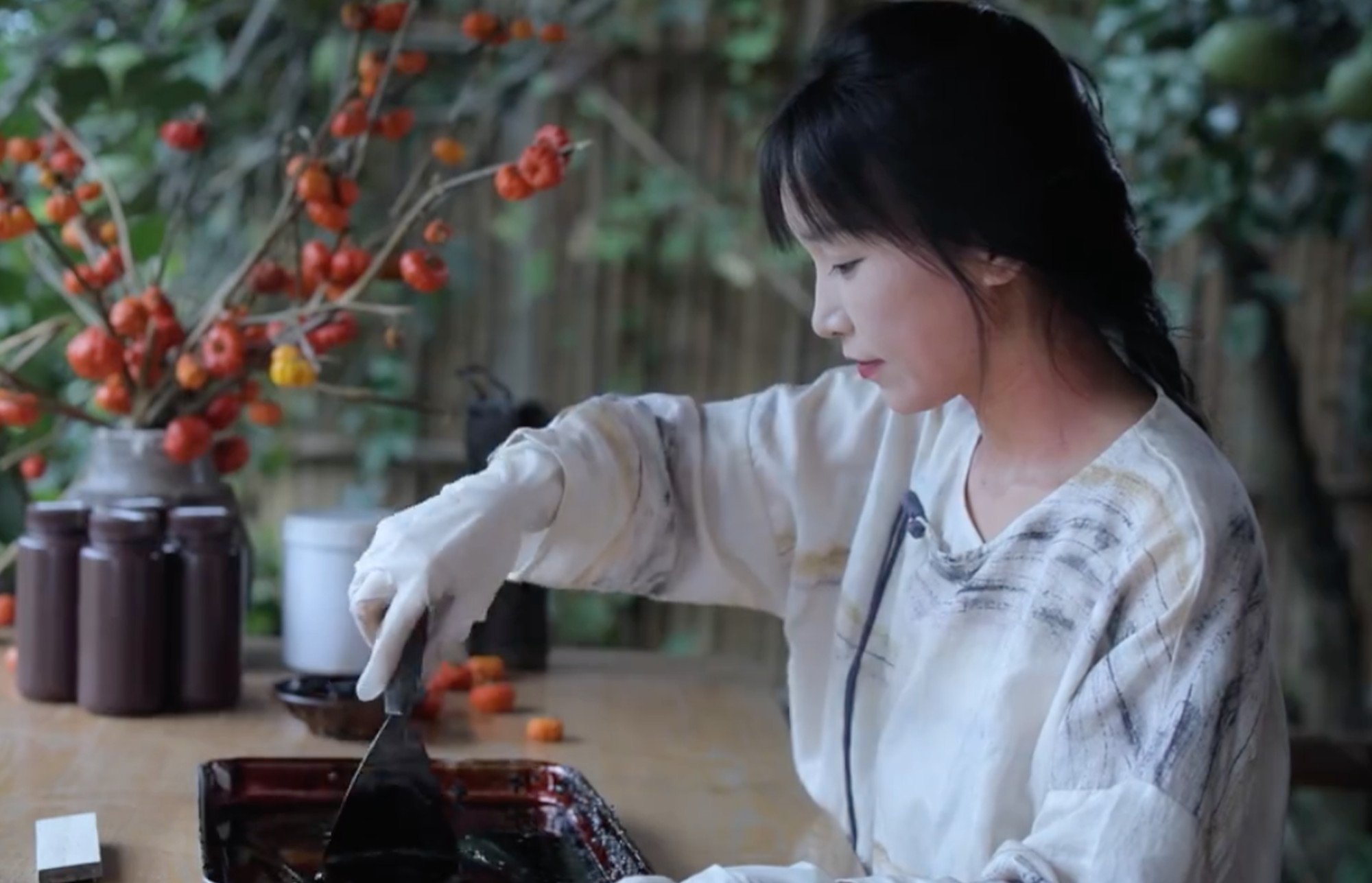
One of them was about making lacquered furniture and the other about using bamboo to turn a woodshed into a forest-themed clothes closet.
Lacquer is a traditional Chinese art dating back thousands of years.
In the first video, Li is seen climbing onto a high lacquer tree to cut its bark and collect the latex.
She then follows traditional procedures to process the raw lacquer liquid before brushing it in multiple layers on an old wardrobe belonging to her grandmother.
Drawing a qilin, an auspicious animal in Chinese mythology, on the wardrobe’s door, Li said in the video: “I send good wishes to everyone who sees this clip. I miss you so much.”
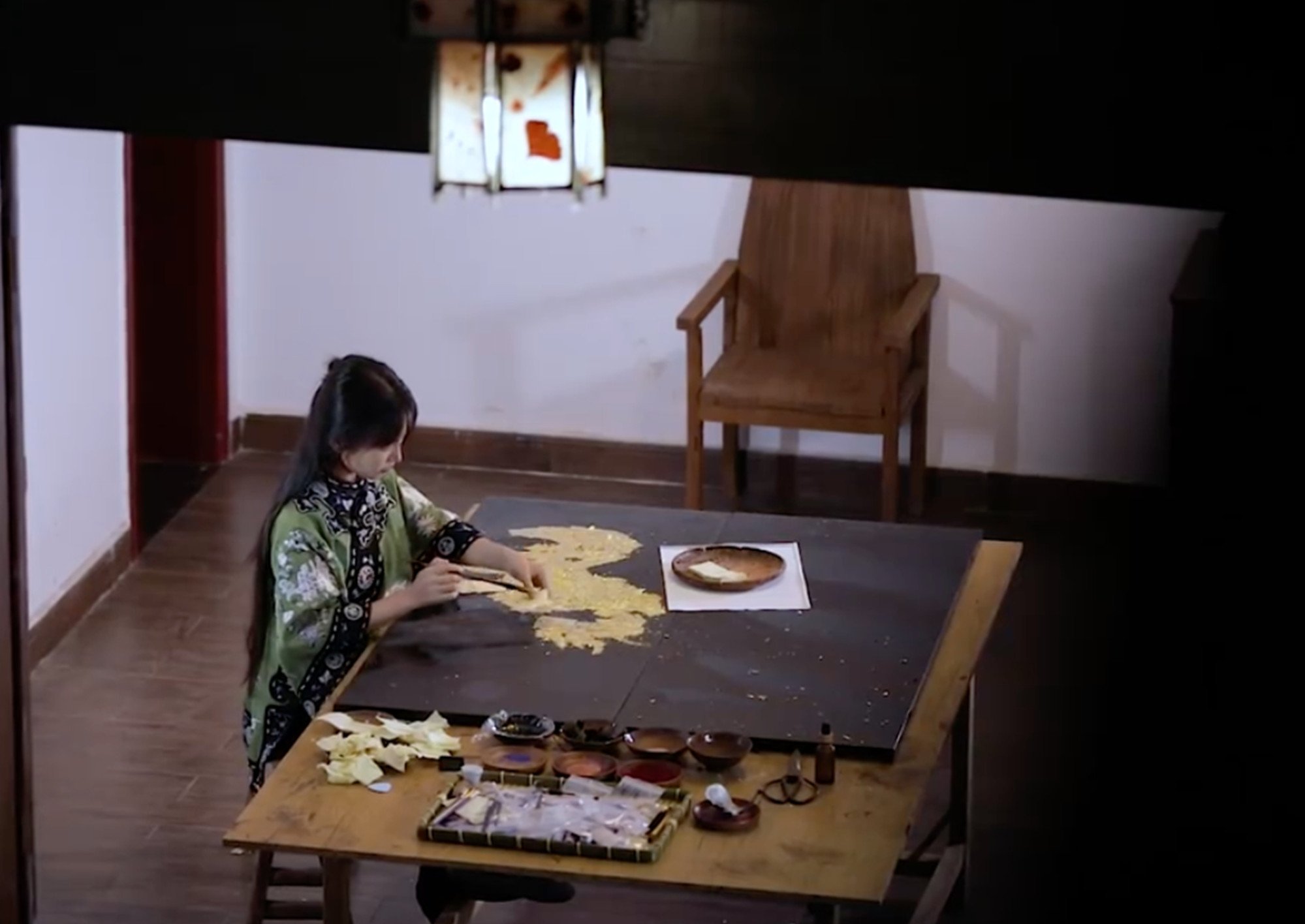
While this lacquer video has has been viewed 140 million times, receiving 1.86 million likes on one platform, her second clip of the bamboo closet has been liked by 4.8 million people online.
“Many years ago, I hoped to have my own cloakroom. I wished it to be located in a forest and surrounded by flowers. I imagined myself lying on the sofa and looking at the stars,” Li captioned the closet video.
The next day, on November 13, Li cheered her followers with more footage showing her make a boobtube dress from Shu brocade, a folk art native of southwestern China’s Sichuan province.
She also made some hair decorations with silk thread she harvested from silkworm cocoons after raising the worms by herself.
The thriving career of the 34-year-old blogger, who hails from southwestern Sichuan province, began in 2015 when she shared picturesque videos of growing crops, preparing food ingredients and cooking.
Internet users have also been intrigued by her exceptional handcrafts in inheriting intangible cultural heritage of China, such as letterpress printing, plant dying and well salt making.
Li halted sharing new contents in the mid-2021 as she and her agent Hangzhou Weinian Brand Management sued and counter-sued each other.
The reason for their dispute has not been released. The two parties reached a settlement at the end of 2022.
During the period of her absence from social media, Li visited 100 artists of intangible cultural heritage across China to learn their skills and “hear their stories”, reported the news website The Cover.

She developed serious allergies when dealing with lacquer work at first, the report said.
Li, who was born Li Jiajia, has changed her name on her identity card to Li Ziqi, in an apparent effort to avoid any potential intellectual property conflict.
Her resurgence online immediately triggered an avalanche of comments.
“We miss you a lot Li Ziqi. Love from India,” said one online observer.
While another person said: “The most awaited comeback in Youtube history ever. Lots of love to you and grandma.”
“Many influencers imitate you, but none can excel you. This is the return of the queen,” wrote another.
Ancient king’s tomb unearthed in China, Song dynasty fashion shock, world’s oldest cheese and more historical finds
https://www.scmp.com/news/china/science/article/3286687/ancient-kings-tomb-unearthed-china-song-dynasty-fashion-shock-worlds-oldest-cheese-and-more?utm_source=rss_feed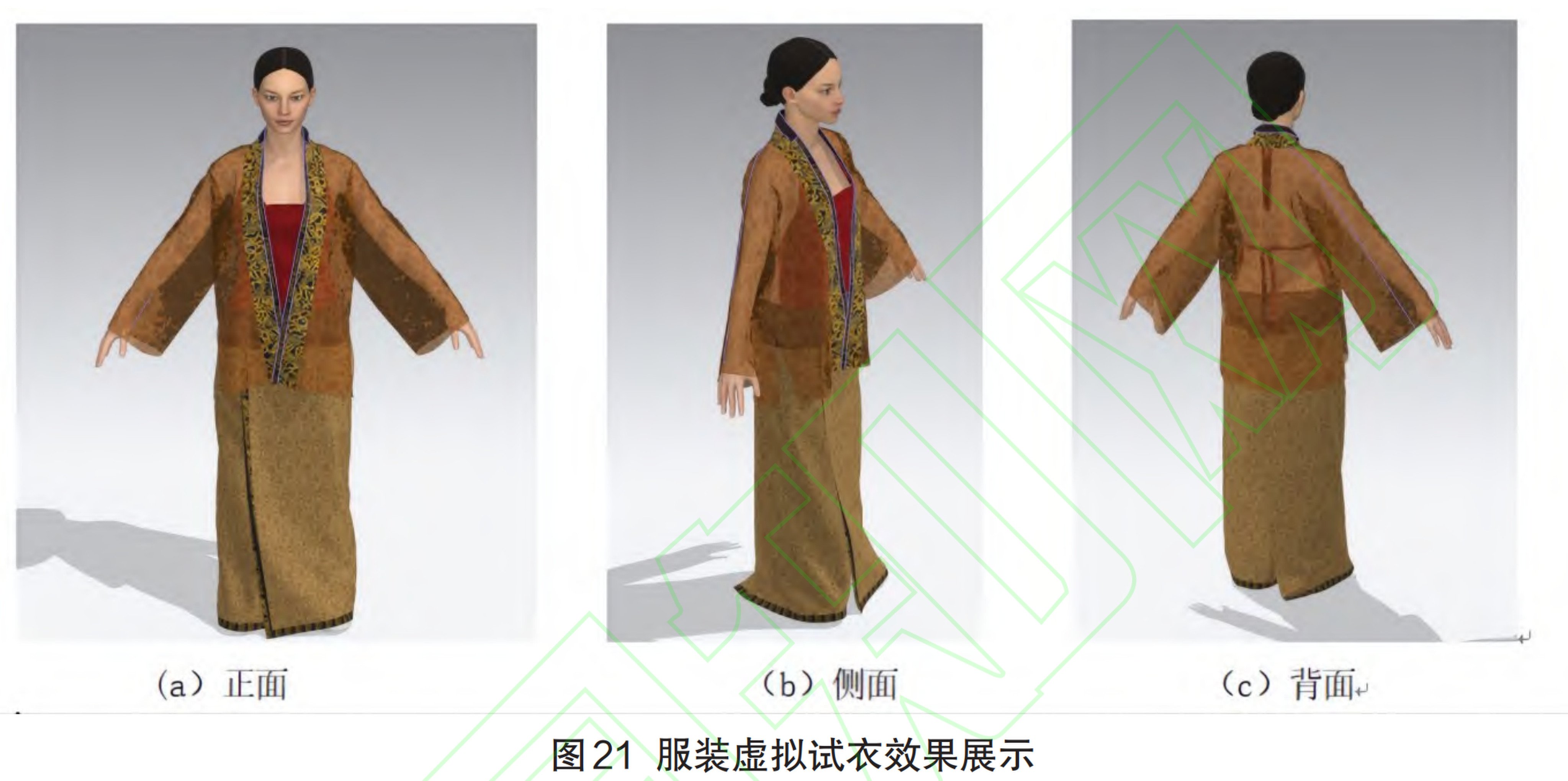
A tomb in Henan province, potentially belonging to a prehistoric king, featured jade ornaments, numerous artefacts and other signs of wealth, suggesting it was a capital of a prehistoric kingdom.
Discover the avant-garde fashion of the Song dynasty, during which women wore tank tops and transparent outfits, revealed through digital reconstruction of an ancient tomb’s treasures by Wuhan Textile University.
The winged lion statue watching over St Mark’s Square, a symbol of the north Italian city, was originally a Chinese tomb guardian from the Tang dynasty dating back more than 1,000 years, raising questions about its journey to Italy.
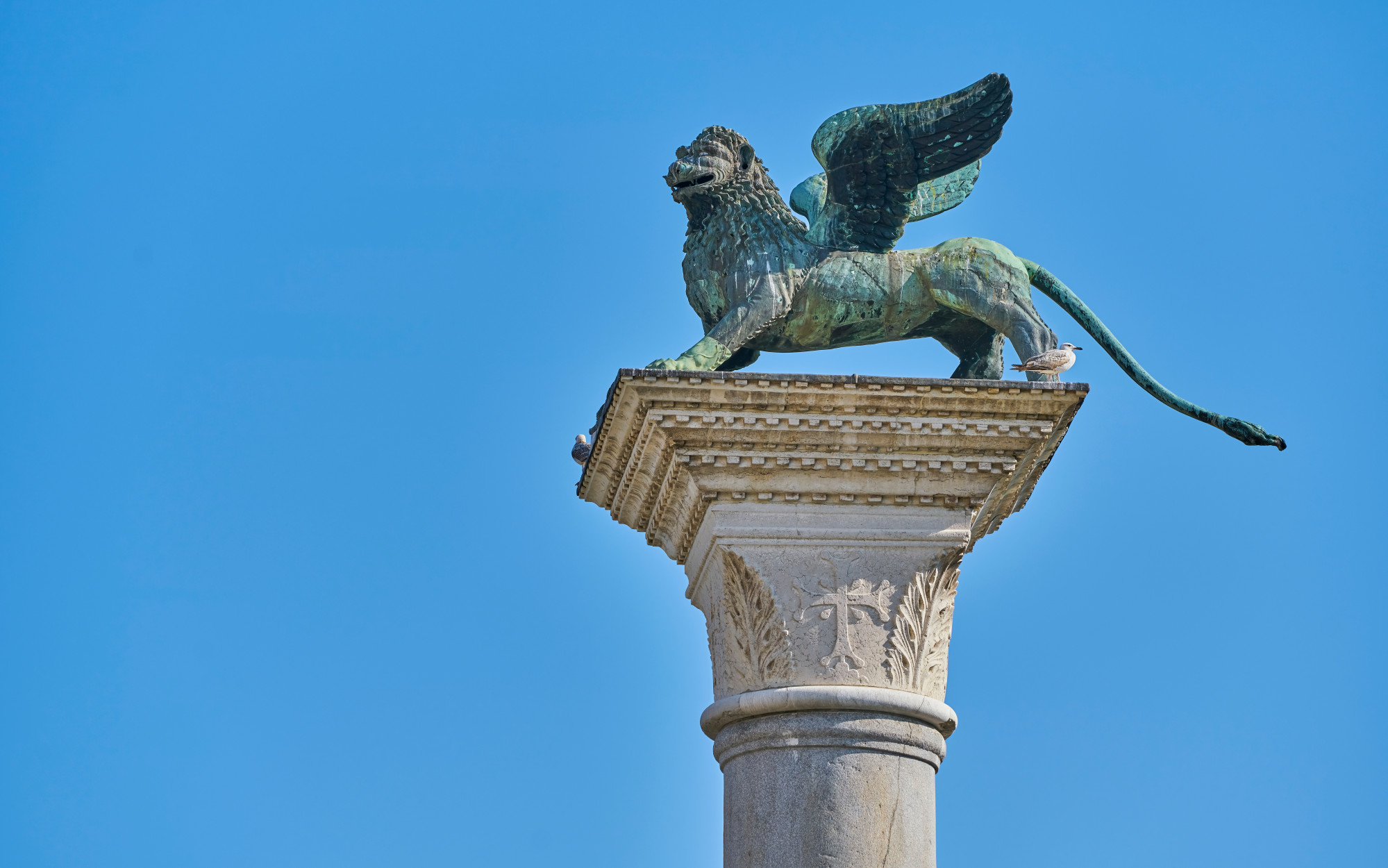
Chinese researchers have discovered the world’s oldest cheese, a 3,500-year-old kefir cheese, in Xinjiang’s Tarim Basin, challenging previous beliefs about ancient diets and animal husbandry practices.
China’s leading researchers of dinosaurs have embarked on pioneering expeditions to Central Asia, marking the nation’s first international foray into the region. This historic move aims to solidify China’s role in global palaeontology, following decades of catching up with international counterparts.
A recent study using AI to analyse 3,000-year-old Chinese oracle bones reveals insights into ancient left- and right-handedness, showcasing how the technology is revolutionising archaeological research and understanding human evolution.
Part of this article was produced with the assistance of generative AI.
Top mathematician quits Europe for China, Pentagon uses Chinese jet image and more best-read stories
https://www.scmp.com/news/world/article/3286669/top-mathematician-quits-europe-china-pentagon-uses-chinese-jet-image-and-more-best-read-stories?utm_source=rss_feed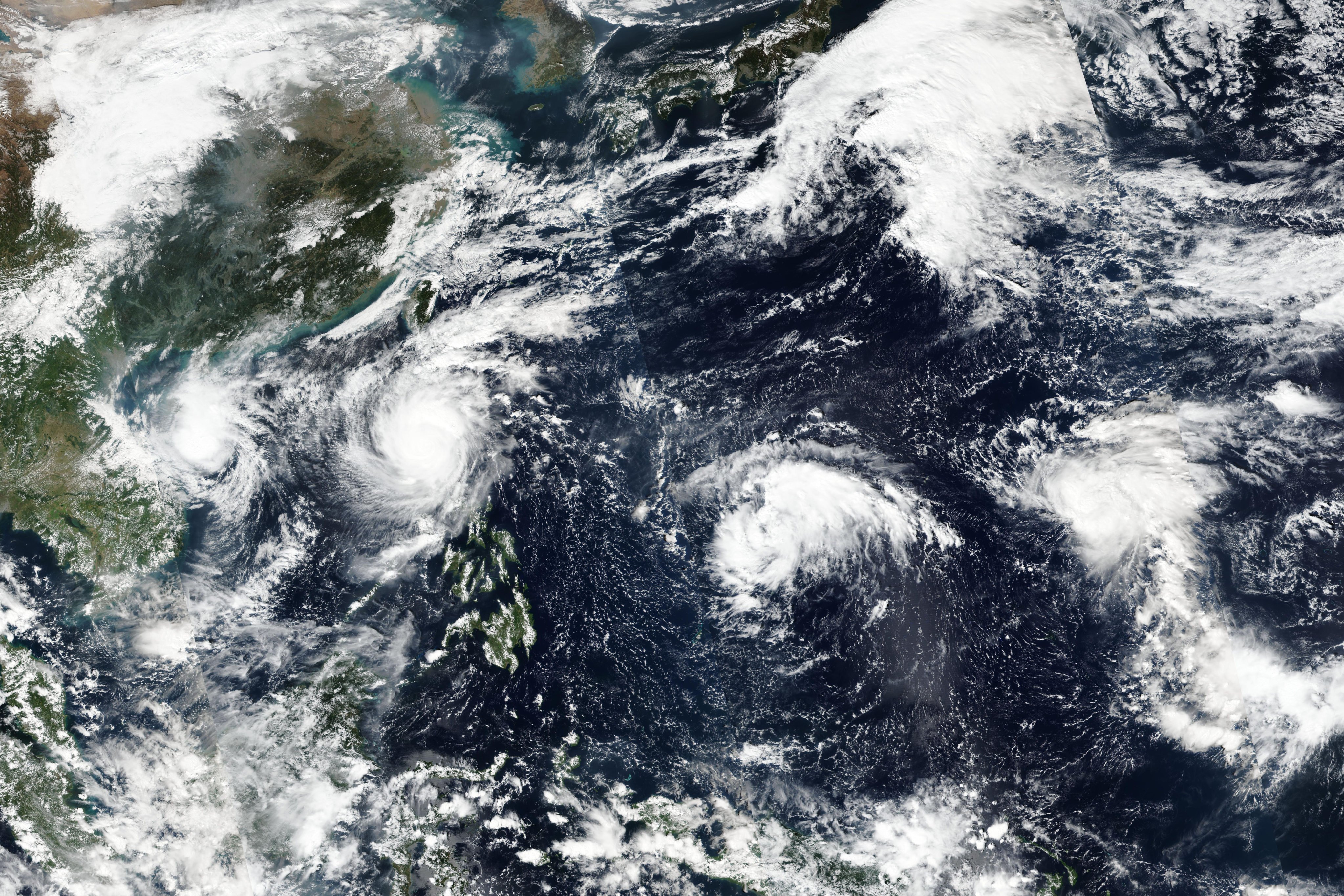
A car owner turned down compensation from a truck driver who hit her pink US$830,000 Rolls-Royce in Guangzhou, China, and then went viral when the story was posted online. But as well as inspiring admiration from some for her act of kindness, she was also accused by many others of staging the whole accident for internet fame.
Professor Ma Xiaonan is set to bring his expertise in differential geometry and topology to the prestigious Chern Institute of Mathematics. His work holds applications across fields ranging from theoretical physics to computer graphics, advancing understanding in areas such as the structure of the universe and quantum mechanics.
Why has Hong Kong experienced an unprecedented number of November typhoons? An expert explains the causes behind these rare late storms, which challenge traditional understanding of typhoon patterns, and whether this may be the new normal.
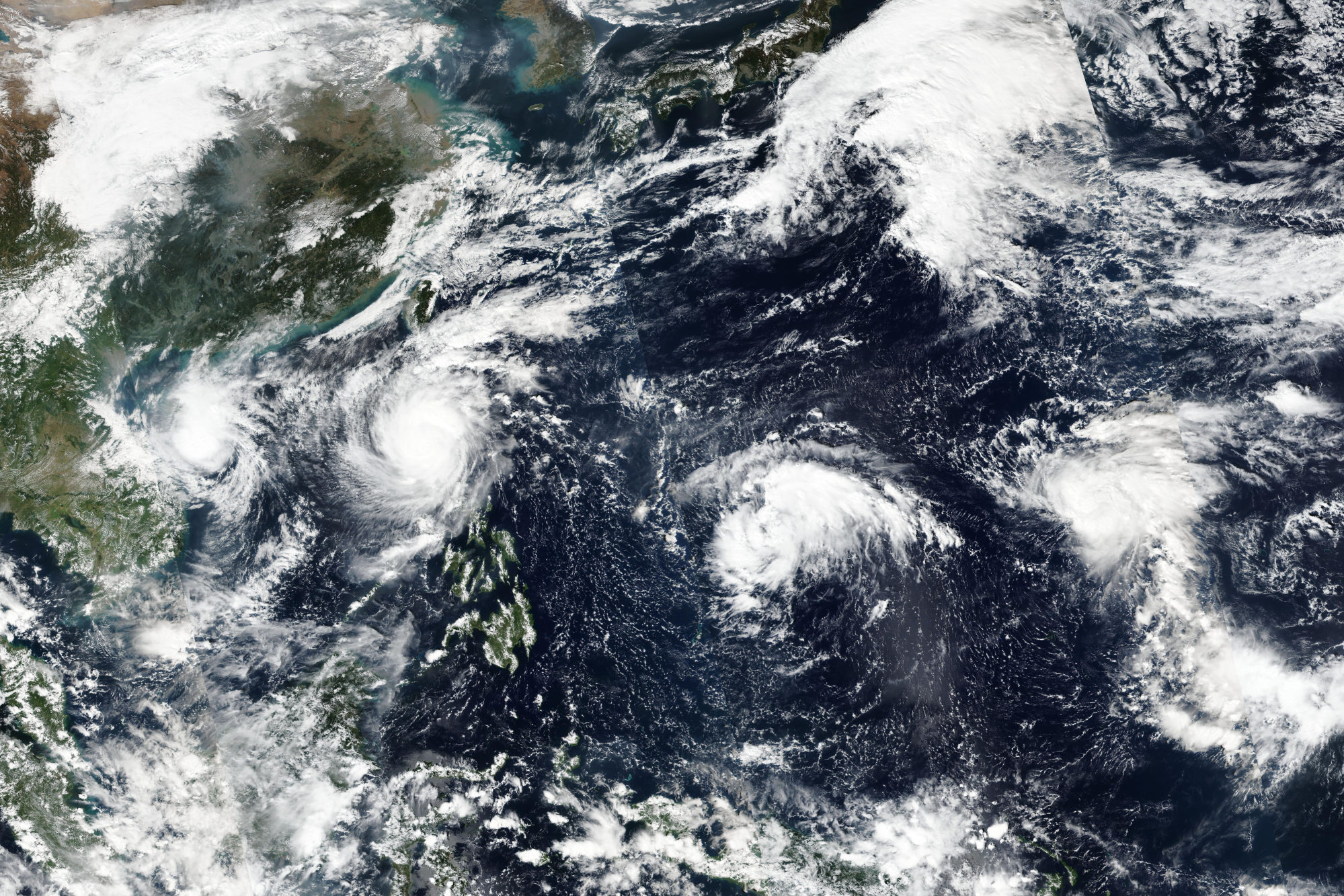
A judge jailed bomb plotter Ng Chi-hung to 23 years and 10 months and leader of the “Dragon Slaying Brigade” Wong Chun-keung to 13½ years for their roles in the 2019 social unrest.
The US defence department faced backlash for mistakenly using an image of China’s new J-35 jet beneath the American flag instead of the US Lockheed Martin F-35 in a Veterans Day poster intended to honour former servicemen and women, sparking criticism and social media outrage.
Donald Trump’s pick for the top diplomat role is known for his China-critical policies and support for Hong Kong’s protesters. His appointment could escalate tensions between the US and China, according to analysts and city officials.
Part of this article was produced with the assistance of generative AI.
China reels from deadly Zhuhai car attack, Trump’s Taiwan demands: SCMP’s 7 highlights
https://www.scmp.com/news/world/article/3286647/china-reels-deadly-zhuhai-car-attack-trumps-taiwan-demands-scmps-7-highlights?utm_source=rss_feed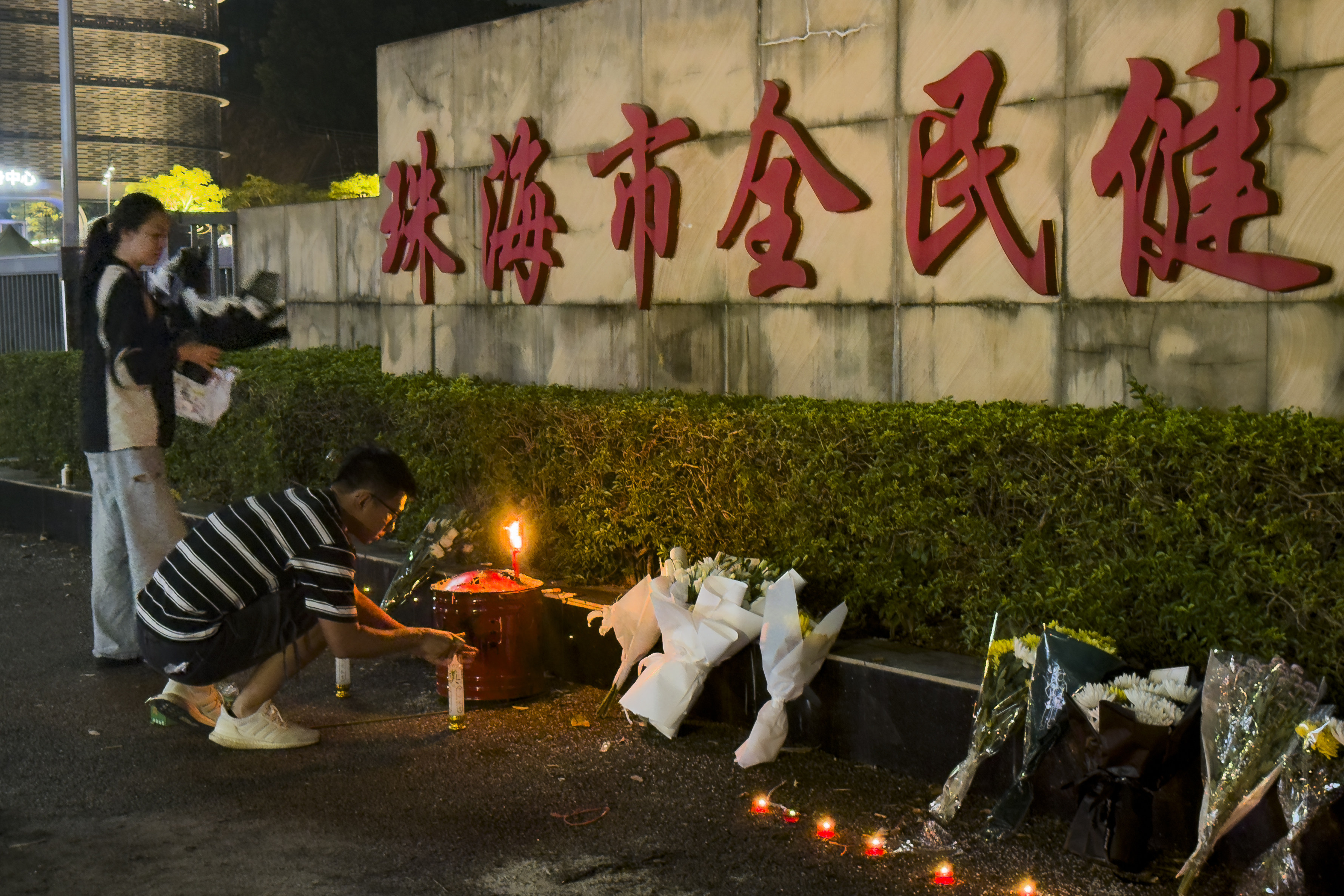
We have selected seven stories from this week’s news across Hong Kong, mainland China, the wider Asia region and beyond that resonated with our readers and shed light on topical issues. If you would like to see more of our reporting, please consider .
Nearly three dozen people were killed in a car attack on a crowd in the southern Chinese city of Zhuhai on Monday, police said, releasing the death toll a full day after the incident.
Taiwan might face impossible expectations from the US president-elect who has called for the island to drastically increase military spending.
A Hong Kong court sentenced Swedish businessman Patrik Tobias Ekstrom to seven years in jail after he was found guilty of raping his domestic helper.
The home-grown C929, still under development, was the subject of a preliminary purchase agreement at China’s premier air show.
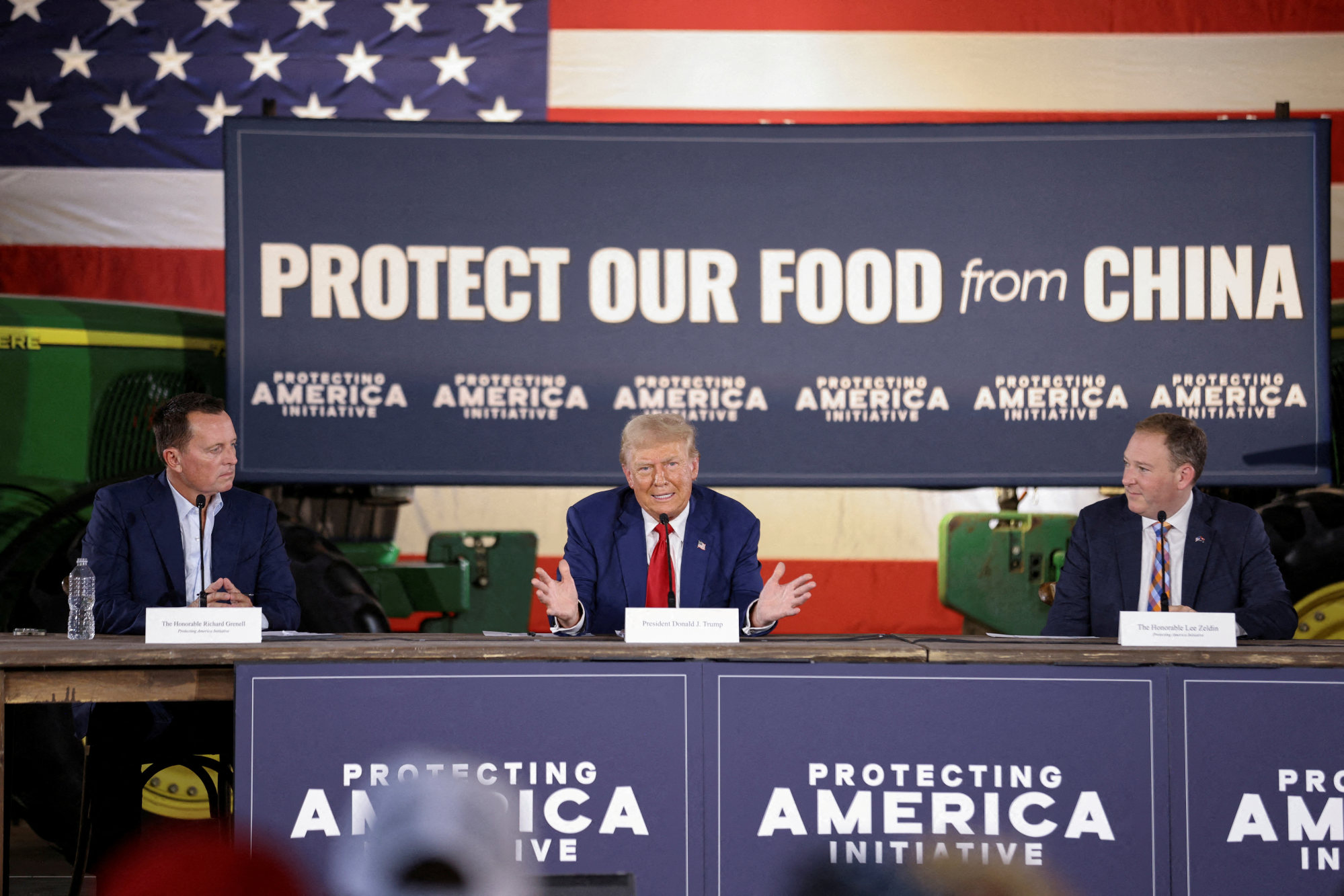
Inquiries by Chinese companies for factory and office space in Malaysia have spiked since Americans voted for Donald Trump to return to the White House, driven in part by his campaign pledge to slap 60 per cent tariffs on Chinese goods.

The leader of a Japanese conservative party has apologised for saying the solution to the nation’s population crisis would be to ban women from getting married after the age of 25 and have their uteruses removed at 30.
British actress Rosamund Pike professes a deep affection for Chinese language and culture, and previously shared a rather rude idiom in Mandarin during a chat show.
Philippines’ latest South China Sea resupply mission ends smoothly under Beijing deal
https://www.scmp.com/news/asia/southeast-asia/article/3286685/philippines-latest-south-china-sea-resupply-mission-ends-smoothly-under-beijing-deal?utm_source=rss_feed
The Philippine navy transported food and other supplies to a territorial ship outpost in a shoal in the South China Sea without any confrontation with Chinese forces guarding the disputed area, officials said Friday.
The Philippine delivery of supplies and military personnel on Thursday to the Second Thomas Shoal was the third such trip that did not lead to any confrontation since July, when both sides signed a rare deal to stop an alarming spike in violent confrontations.
“The Armed Forces of the Philippines continues to uphold its mandate of safeguarding Philippine sovereignty and ensuring the welfare of its stationed personnel in the West Philippine Sea,” military spokesperson colonel Xerxes Trinidad said, using the Philippine name for the South China Sea.
“There were no untoward incidents during the mission,” Trinidad said.
The Philippines occupied the shoal by permanently beaching a navy ship in its shallows in 1999, prompting China, which also claims it, to surround the atoll with its coastguard and naval forces in what has been a continuing territorial stand-off.
Called Ayungin by the Philippines and Ren’ai Jiao by China, the shoal had been the most dangerous flashpoint in the South China Sea and became the scene of increasingly violent confrontations starting last year that alarmed other governments, led by the United States.
The deal, which has not been made public, outlines a temporary arrangement that lets the Philippines transport supplies and fresh batches of Filipino forces to Manila’s ship outpost without clashing with China’s coastguard, navy and suspected militia ships guarding the shoal.
Neither side conceded its territorial claims under the deal, which only applies to the Second Thomas Shoal, according to Philippine officials.
The agreement was reached after China agreed to drop a demand for the Philippines to notify China in advance of any trip to the shoal and for Chinese forces to board Philippine supply vessels for inspection, two Philippine officials said in July. They spoke on condition of anonymity for lack of authority to discuss the negotiations publicly.
It’s the first known agreement by China with any one rival claimant country over a specific shoal in the South China Sea, which Beijing claims almost in its entirety.
Before the deal was reached, Chinese coastguard and navy forces had used powerful water cannons and dangerous blocking manoeuvres to prevent Philippine supply vessels from reaching Manila’s fragile outpost at the shoal – the long-grounded and rusting warship, the BRP Sierra Madre.
In the worst confrontation, Chinese forces on speedboats repeatedly rammed and then boarded two Philippine navy boats on June 17 to prevent Filipino personnel from transferring food and other supplies including firearms to the BRP Sierra Madre, the Philippine military said.
The Chinese forces seized the Philippine navy boats and damaged them with machetes and improvised spears. They also seized seven M4 rifles, which were packed in cases, and other supplies in a chaotic face off that wounded several Filipino navy personnel. The assault was captured in video and photos that were later made public by Philippine officials.
China and the Philippines blamed each other for the confrontation. The US, Japan and Australia were among those who condemned the Chinese actions at the shoal.
While clashes have stopped at the Second Thomas Shoal, sporadic confrontations have continued elsewhere in the South China Sea. Vietnam, Malaysia, Brunei, Taiwan and, at times, Indonesia, have also been involved in the long-seething territorial disputes in the busy waterway.
Xi hails Peru megaport as new era in China’s belt and road ambitions
https://www.scmp.com/news/china/diplomacy/article/3286655/xi-hails-peru-megaport-new-era-chinas-belt-and-road-ambitions?utm_source=rss_feed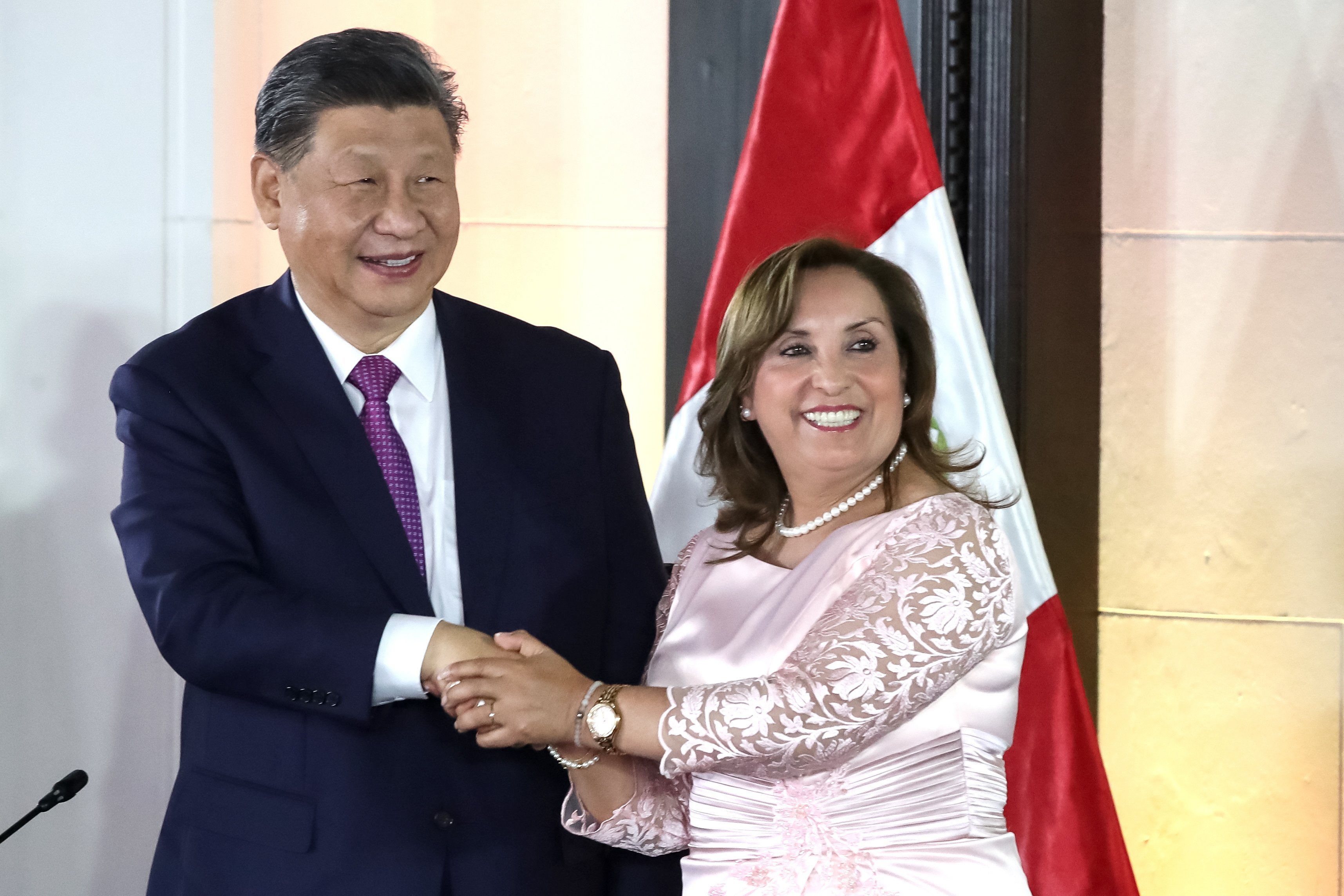
Chinese President Xi Jinping took part in the inauguration of a major Beijing-funded port in Chancay, Peru, on Thursday, hailing the US$3.5 billion project as “the birth of a new land-sea passage for a new era”.
In his speech at the megaport’s opening ceremony, the Chinese leader praised the project as “a successful case of Sino-Peruvian cooperation under the aegis of the Belt and Road Initiative”.
Xi said the investment would create a new maritime corridor between China and Latin America, “connecting the great Inca trail and the maritime Silk Road, paving the way for common prosperity for Peru” and other nations in the region.
“More than 2,000 years ago, Chinese ancestors set sail across the Pacific, forging the Maritime Silk Road and connecting East and West. Over 500 years ago, Peruvian Inca people fearlessly crossed mountains and valleys, building the Inca Trail that traversed the Andes from north to south,” Xi noted.
“Today, the Chancay Port is becoming a new starting point for a modern Inca Trail. From Chancay to Shanghai, we are witnessing not just new development under the belt and road initiative in Peru, but also the birth of a new land-sea passage for a new era.”
The Chinese leader also urged project partners to boost transport capacity, improve services and strengthen connections between South America and China.
Xi arrived in Peru earlier in the day, visiting the South American country not only to celebrate the port’s completion but also to attend an annual meeting of the Asia-Pacific Economic Cooperation Forum.
Dozens of Peruvian officials and members of the country’s armed forces were on hand to greet Xi as he landed in Callao. A woman dressed in traditional Peruvian attire handed the Chinese leader a bouquet of red flowers.
His motorcade was welcomed by Chinese flags lining the route from the airport to Peru’s presidential palace in Lima, where the country’s president, Dina Boluarte, greeted him.
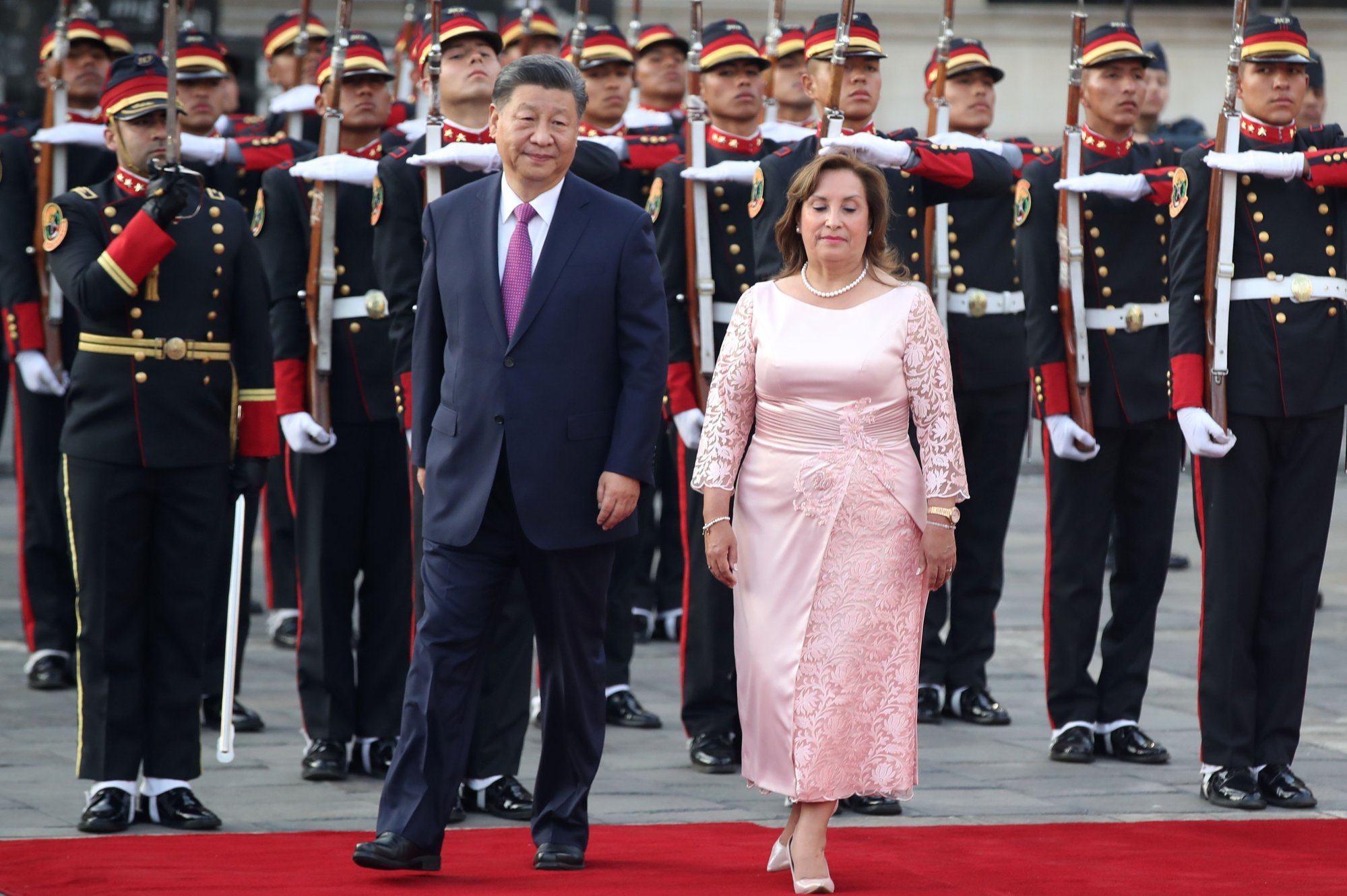
Xi’s delegation did not travel to Chancay due to security concerns. But he appeared via live link to about 200 guests, including leaders of the project’s majority shareholder, Chinese state-owned Cosco, its Peruvian partner Volcan and local officials.
His entourage also included Cai Qi, secretary of the Secretariat of the Communist Party, Foreign Minister Wang Yi, foreign vice-minister Hua Chunying, China International Development Cooperation Agency director Luo Zhaohui, commerce minister Wang Wentao, finance minister Lan Foan, and the National Development and Reform Commission chairman, Zheng Shanjie.
At the event, Boluarte said the new port will add one percentage point to her country’s GDP once it starts operations, beginning “a transformation that will turn [Peru] into a strategic centre for Asia … [and] a key player in global trade, which will translate into more investments and development”.
“This port in Chancay symbolises the potential of this collaboration [with China] … and its importance is undeniable,” she added.
Besides the port inauguration, China and Peru have also signed several cooperation agreements, including an update of their 2009 free trade agreement.
While the new terms are not yet public, Peru’s trade ministry said that “new chapters and provisions have been added … which will favour greater trade integration” between the two economies.
China also declared Peru free of foot-and-mouth disease, allowing Peruvian meat producers to export to China for the first time.
In Chancay, a city of some 60,000 residents and located 78 kilometres (48 miles) from Lima, celebrations began in the morning with performances by traditional Peruvian musicians and Chinese acrobats as well as a concert by a local symphony orchestra.
Xi’s participation in the port’s inauguration underscored its importance in the Belt and Road Initiative, Beijing’s infrastructure scheme to improve trade and economic integration around the world.
Since the initiative’s launch in 2013, Xi has only attended two project ceremonies: one for a high-speed railway in Laos and one for Coca Codo Sinclair dam in Ecuador.
The latter is widely considered a significant failure, with structural flaws causing billions of dollars in losses, damage to Ecuador’s electricity grid and resulting in several local officials facing corruption charges.
Xi’s visit yielded a meticulously organised inauguration ceremony to showcase “the aspirations of the infrastructure projects” funded by Beijing, said Parsifal D’Sola of the Andres Bello Foundation, a Colombian-based think tank.
The event transpired amid favourable political and economic conditions in Peru, D’Sola added, and as the Apec gathering drew international media, heads of state and leaders of the banking industry and large multinational corporations.
“The Chancay port is the perfect opportunity, with the perfect audience, with a friendly government, to make a big splash, not only in Peru and not only in Latin America but at a global level.”
The megaport ceremony coincides with Donald Trump’s unveiling of his top picks for his second term as US president. His nominees include US senator Marco Rubio, a Florida Republican, to run the State Department.
Rubio has been one of China’s most vocal critics in the US Congress. A Cuban-American and fluent Spanish speaker, he has long urged Washington to refocus on the Americas and counter Beijing’s rising influence in the hemisphere.
He has blasted left-leaning South American countries moving closer to Beijing, despite right-leaning former leaders like Argentina’s Mauricio Macri and Colombia’s Ivan Duque ardently touting Chinese investment in the region.
Should the new port live up to Beijing and Lima’s expectations, it could prove pivotal for South American trade flows across the Pacific, highlighting Washington’s challenge in keeping pace with Beijing to fund major South American infrastructure projects.
“They cannot compete with China on a dollar basis,” said D’Sola of the US, citing Beijing’s centralised foreign policy hastening the engagement of public and private companies.
And a confrontational approach by Washington, as happened during Trump’s first term, he added, could “backfire”.
“They might be able to exert some economic pressure on smaller countries in Central America, but I don’t think the US has enough leverage over South America.”
Additional reporting by Mark Magnier and Edith Lin in Lima, Peru
China cancer man denounced for using US$97,000 donations to buy flat, hiding family wealth
https://www.scmp.com/news/people-culture/trending-china/article/3286410/china-cancer-man-denounced-using-us97000-donations-buy-flat-hiding-family-wealth?utm_source=rss_feedA 29-year-old cancer patient in China who sought to raise 900,000 yuan (US$125,000) online for medical treatment has sparked suspicions of embezzlement after he posted photos of a new flat.
The post came shortly after he had raised more than 700,000 yuan (US$97,000) in just a few days.
The man, surnamed Lan, from Yichang in Hubei province central China, was diagnosed with Hodgkin’s lymphoma, a rare cancer, and began his fundraising campaign on a popular crowdfunding platform on October 14.
He introduced himself as a 2020 graduate from Nanjing University in Jiangsu province, north of Shanghai, who worked at a major internet company in Guangzhou before being diagnosed with cancer.
A formal disease certificate confirmed his diagnosis, noting that “the disease is difficult to treat when it recurs”.
The man revealed that his family’s finances were drained by his father’s medical bills and subsequent death, leaving them with significant debts.
According to his friends, Lan’s fundraising campaign circulated widely, with pleas posted in alumni groups and on social media.
He even documented his personal story through videos and shared his bank account details for donations.
Doubts surfaced among donors regarding Lan’s financial transparency when, on November 6, he shared images of a newly purchased flat in a group chat, claiming that the crowdfunding effort brought in more than 700,000 yuan in just a few days.
The group message also shows Lan claiming: “This is my new home, total price 738,000 yuan,” raising suspicions of fund embezzlement.
Compounding the concerns, a previous marriage advertisement posted by Lan disclosed that his family owned multiple properties, including two residential flats valued up to one million yuan (US$139,000).
The family also owned commercial property worth more than 3.8 million yuan generating 145,000 yuan in annual rental income.
However, his profile on the crowdfunding platform listed only a single property valued between 300,000 to 500,000 yuan (US$42,000 to US$70,000) and a car he claimed was “up for sale.”
As a result the crowdfunding platform terminated Lan’s channel on November 7, by which time he had received more than 270,000 yuan from more than 4,536 contributors.
Lan later claimed that he deposited 200,000 yuan from the donations into a fixed-term savings account, denying allegations that he used the funds to buy real estate.
On November 7, the crowdfunding platform released an official statement confirming that Lan had concealed his family’s real financial situation.
“In accordance with platform rules, all funds raised by Lan, totaling 278,204 yuan, have been fully recovered and will be refunded to the donors. Lan has been added to the ‘discredited fundraisers’ blacklist and is permanently banned from initiating any future fundraising campaigns on our platform,” the statement said.
It is unclear whether Lan will face any legal punishment.
The incident, reported by Red Star News, has reignited public concerns about transparency in charity crowdfunding.
One person said: “He has lost his chance to freeload, but his deception could make more people hesitant to donate to those genuinely in need.”
“This is why I don’t donate on platforms. You never really know if the recipient is truly in need. Sometimes, they are even wealthier than you. I only donate to people I know well and trust,” said another person.
China’s FAST telescope a beacon of ‘soft power’, Shaw laureate Shrinivas Kulkarni says
https://www.scmp.com/news/china/science/article/3286516/chinas-fast-telescope-beacon-soft-power-shaw-laureate-shrinivas-kulkarni-says?utm_source=rss_feedUS-based astronomer Shrinivas Kulkarni is a “big fan” of the Five-hundred-metre Aperture Spherical Telescope (FAST).
The professor of astronomy and planetary sciences at California Institute of Technology (Caltech), who won this year’s Shaw Prize in Astronomy, described the world’s largest and most sensitive single-dish radio telescope in China’s southwest province of Guizhou as “a terrific facility” with a global presence.
“Kudos to the Chinese government for making it a truly international facility as well as allowing other scientists to use it,” he said, adding that radio astronomers worldwide received invitations every year to propose projects on the telescope.
Kulkarni was one of three Shaw prizewinners who spoke to the Post on the sidelines of the awards ceremony held in Hong Kong on Tuesday. Kulkarni received the top honour for his sustained series of fundamental discoveries in time-domain optical and radio astronomy. He has uncovered astronomical objects including millisecond pulsars, gamma-ray bursts and supernovae.
Describing FAST as the “best demonstration of soft power”, Kulkarni said findings made by international researchers using the telescope would always acknowledge China, and he hoped Beijing would continue to allow international access to encourage high-quality research.
“Astronomy is by its very nature very international because we all study the same sky,” he said. “If I make a discovery in one country, it does not matter which country it is. Science is really universal.”
Kulkarni said astronomy was one of the best sciences to go across borders because of its “harmless” nature, raising little concerns on sensitive issues such as national security.
Pointing to the example of the United States, which started attracting foreign scientists into the country after World War II, he said other countries could benefit from allowing access and promoting openness.
He said in the past two decades, China had been focused on bringing in and giving opportunities to foreign talent, which was an efficient use of resources and a powerful way to showcase soft power.
“You really want to use all the brains on this planet as efficiently as possible,” he said.
Meanwhile, US cell biologist Scott Emr, who won the Shaw Prize in Life Science and Medicine in 2021, was presented with his gold medal at the ceremony, after receiving his certificate in his home country back in 2021. Emr was recognised for his discovery of a universal apparatus in cells by which they identify the parts that have decayed and become defective, and how they recycle themselves.
The professor of molecular biology and genetics at Cornell University said China had established a culture in labs that encouraged students to strive for the best in science, something that was not widely seen in American students today who tended to join the commercial sectors.
“China is a force that no one would have predicted would be where it is today. The quality of the students and the drive that they have for doing research is something that we have not seen in the United States for 25 years,” he said.
“Most of the very talented Chinese students that I see are driving forward because they want to become the next engine of discovery,” he said. “They see only the top and they really want to try and get there. It is wonderful to have that kind of desire and passion.
“China is on this trajectory [while] the United States has plateaued off. China is just basically passing us by in the US,” he said, referring to the number of published papers and their impact.
“That is not a bad thing – we are all in this for a similar reason. But it is amazing to watch. I have had many Chinese students work in my lab and it is fun to see that kind of passion back again.”
He said that in his experience, it was more common for Chinese students to enter careers in research science, while most science students from the US preferred to go into the pharmaceutical and biotech sectors.
In the field of maths, “China is now becoming competitive, there’s no question about it”, said Peter Sarnak, winner of this year’s Shaw Prize in Mathematical Sciences.
He won for developing the arithmetic theory of thin groups and the affine sieve – work that began at a conference in the Chinese city of Hangzhou in 2005.
A question raised during that conference led Sarnak to believe the answer could be found with number theory from the 1800s. Sarnak eventually went on to execute a “sieve” that produces prime numbers in high dimensions.
This technique has a very wide array of applications including developing optimal quantum logic gates – a type of basic circuit – for quantum computing.
Sarnak, a professor of mathematics at Princeton University, said many of his PhD students had been from China where there was “tremendous talent”.
Sarnak, who was born in South Africa, moved to the US for his studies. He said the US had for many years brought the best students from around the world, including China, which it “has benefited tremendously from”.
For the advancement of mathematics as well as its applications, he said international collaboration was “extremely important”.
The Shaw Prize is a series of annual international awards given to researchers who have made marked contributions to the fields of astronomy, mathematical sciences, as well as life sciences and medicine.
China’s retail sales growth hits 7-month high on stimulus, property drag continues
https://www.scmp.com/economy/economic-indicators/article/3286646/chinas-retail-sales-growth-hits-7-month-high-stimulus-property-drag-continues?utm_source=rss_feedChina’s consumption posted strong growth in October on the back of Beijing’s stimulus measures, increasing hope the world’s second-largest economy can accomplish its annual economic growth target.
Retail sales, a key indicator of consumption, increased by 4.8 per cent year on year last month, compared with the 3.2 per cent growth in September, marking the highest level since February, according to data released by the National Bureau of Statistics on Friday.
The reading beat expectations of 3.9 per cent growth projected by economists polled by Chinese financial data provider Wind.
China’s overall fixed assets investment, including major items such as infrastructure construction, manufacturing and property spending, rose by 3.4 per cent in the first 10 months of the year, unchanged from January to September.
Property investment, which has been a major drag of the economy, fell by 10.3 per cent year on year in the first 10 months of the year, compared with the 10.1 per cent fall in the first three quarters of this year.
China has been rolling out a series of heavyweight supportive policies since late September to prop up its flagging property market, leading with cuts to its mortgage rate for existing housing and its reserve requirement ratio for banks.
More efforts were unveiled in October, including easing purchase restrictions and expanding funding for troubled property developers.
And new home sales increased by 0.9 per cent year on year in October, marking the first rise since last June, according to preliminary data released by the housing ministry earlier this month.
Elsewhere, China’s overall urban unemployment rate for October stood at 5 per cent, down from 5.1 per cent in September.
Industrial output, meanwhile, rose by 5.3 per cent year on year last month, compared with a 5.4 per cent increase in September.
With less than two months left in 2024, China is ramping up efforts and projecting confidence in reaching its annual gross domestic product growth target of “around 5 per cent”.
At the end of last week, China’s top legislative body, the National People’s Congress Standing Committee, unveiled an additional 6 trillion yuan (US$829 billion) bond quota to resolve the so-called hidden debt of local governments.
It also pledged more “forceful” fiscal support measures to underpin China’s economic growth.
More to follow …
US lawmaker introduces legislation to revoke China’s trade status
https://www.scmp.com/news/us/politics/article/3286632/us-lawmaker-introduces-legislation-revoke-chinas-trade-status?utm_source=rss_feedUS Representative John Moolenaar on Thursday introduced a bill that would revoke the normal trade relations Washington has had with Beijing for more than two decades, joining China hawks in the Senate in a bid to decouple the countries’ economies.
As proposed, the measure would set minimum 35 per cent tariffs on Chinese imports, allow for the duties to rise to 100 per cent and give the US president the ability to phase the change in over five years. Moolenaar, a Republican from Michigan, chairs the US House Select Committee on Strategic Competition Between the United States and the Chinese Communist Party (CCP).
The bill would also strip de minimis treatment for lower-value packages coming in from China, which exempts shipments valued under US$800 from import duties, taxes and rigorous screening.
“Having permanent normal trade relations with China has failed our country, eroded our manufacturing base and sent jobs to our foremost adversary,” Moolenaar said. “The CCP has taken advantage of our markets and betrayed the hopes of freedom and fair competition that were expected when its authoritarian regime was granted permanent normal trade relations.”
Permanent normal trade relations (PNTR) status was passed by Congress and signed into law by then president Bill Clinton in 2000, allowing the two sides to align their trade relationship with the rules of the World Trade Organization (WTO), which China acceded to a few months later.
US Senators Tom Cotton of Arkansas, Marco Rubio of Florida and Missouri’s Josh Hawley, all Republicans, introduced a similar bill in September.
“Giving Communist China the same trade benefits that we give to our greatest allies was one of the most catastrophic decisions that our country has ever made,” Rubio, whom president-elect Donald Trump has nominated to be his secretary of state, said when the Senate bill was announced.
“Our country’s trade deficit with China more than quadrupled, and we exported millions of American jobs. Ending normal trade relations with China is a no-brainer,” Rubio said.
Moolenaar’s panel has no authority to advance the legislation to the House floor because it is not a permanent committee.
The Senate version so far has no additional co-sponsors, and Moolenaar’s does not appear to have any. In addition, there are only four weeks left in the congressional session. All pending legislation dies at the end of a session, though it can be reintroduced after a new Congress is seated.
Economists warn that revoking China’s trade status would trigger retaliation by Beijing, in turn hurting American producers of agricultural products and some other sectors.
“Our odds of Congress stripping China’s PNTR are rising, but are still pessimistic at 40 per cent,” said Henrietta Treyz, director of economic policy at Veda Partners, a business consultancy.
“Given retaliation from China hits the farming states first and most of those are governed by Republican lawmakers, those senators generally take a dim view of exposing their voters to negative economic events, she said.
The are the latest of several attempts by lawmakers in recent years to end PNTR for China.
Citing a loss of US manufacturing jobs and accusing Beijing of using forced labour, Cotton and two other Republican senators – Jim Inhofe of Oklahoma and Florida’s Rick Scott – put forward the China Trade Relations Act in 2021.
That bill, which never made it to a vote, would have required the US president to approve regular trade relations annually and allowed Congress to override the president’s decision.
With China’s C919 flying high, factory visits aim to replicate Boeing’s branding success
https://www.scmp.com/economy/china-economy/article/3286589/chinas-c919-flying-high-factory-visits-aim-replicate-boeings-branding-success?utm_source=rss_feedChina’s flagship civilian aircraft maker, which is now competing with Airbus and Boeing in the home market, is weighing plans to turn its C919 factory compound into an industrial tourism hotspot and base of patriotism education, according to a company source.
The state-owned Commercial Aircraft Corporation of China (Comac) will let tourists visit portions of its 2.67 million-square-metre (28.74 million-square-foot) factory site near Shanghai Pudong International Airport, the source told the Post this week at the Zhuhai air show.
The manufacturer was inspired by how Boeing made its Everett Production Facility – known as the world’s largest building by volume – into a popular tourist attraction in the US state of Washington, the source said.
Comac’s success in turning China’s jumbo-plane dreams into reality is widely touted by state media and its ambitions of grabbing a share of the global aviation market also fit into Beijing’s narrative of self-reliance and creating high-quality productive forces.
Comac kicked off trial operations of a large-aircraft technology “camp” for teenagers in September. The study programme, organised by China Travel Service, is open on certain weekdays, with an admission price of around 600 yuan (US$82).
The camp includes visits to the C919 aircraft assembly site, “experience classes” and on-site interactions with test pilots, the manufacturer said in a statement, adding that the scheme offers “vivid on-site experience and in-depth professional exploration”.
In a recent visit by the Post, participants visited the test flight command hall, where company engineers spoke about how humans achieved flight.
“Both Boeing and Airbus offer tours of their facilities, and these are very popular,” said Dennis Lau, consultancy services director with Hong Kong-based aviation services firm Asian Sky Group. “If Comac were to offer tours, then I’d expect these to be equally as popular.”
The Chinese civilian aircraft maker is on a mission now to boost orders for its C919, which compares in terms of specifications to the Airbus 320 and Boeing’s 737 families of planes.
Major airlines in China have ordered at least 300 C919s since the aircraft’s first commercial flight in May 2023. Comac is now seeking offshore sales through new offices in Hong Kong and Singapore.
Children excited about flight, and adults interested in China’s factory work – a pillar of its foreign trade – will welcome a chance to visit Comac, said Steven Zhao, CEO of the travel agency China Highlights.
“There’s likely to be some interest, depending on the type of traveller and their field,” Zhao said.
Comac also makes the older, smaller C909, which used to be known as the ARJ21. Xinhua reports the model has handled 46,000 trips totalling 81,000 flight hours.
The aircraft maker’s compound in Shanghai wants to add facilities such as a museum that generates publicity and extra income. More production facilities will mean “more to see” for visitors and a bigger capacity to receive students and tourists, the company source said.
Boeing began offering guided tours of its Everett plant in 1968 with the release of the 747 aircraft. The 80-minute tours include what the company website calls a “front-row view of current airplane production” and items from the company’s history, dating back 108 years.
More than 100,000 people take the Boeing factory tour every year, according to the company website.
Its chief rival, Airbus, offers guided tours specific to its 321 and 350 aircraft series at the Toulouse, France, headquarters – along with a specialised tour for children.
China Builds Test Version of Nuclear Reactor for Navy
https://learningenglish.voanews.com/a/china-builds-test-version-of-nuclear-reactor-for-navy/7863772.htmlChina has built a land-based test version of a nuclear reactor for a large warship. The development is the clearest sign yet that Beijing is moving toward producing the country’s first nuclear-powered aircraft carrier. This information comes from a new study of satellite imagery and Chinese government documents provided to the Associated Press.
Why is this development important?
There has long been talk that China is planning to build a nuclear-powered aircraft carrier. But the recent research by the Middlebury Institute of International Studies in California is the first to confirm the country is working on a nuclear-powered movement system for a carrier-sized surface warship.
China’s navy is already the world’s largest in terms of numbers.
China's navy has also been developing quickly. Adding nuclear-powered carriers to its fleet would be a major step in realizing its hopes for a force capable of operating around the globe.
Nuclear carriers take longer to build than conventional carriers.
But once nuclear carriers are in operation, they are able to stay at sea for much longer because they do not need to refuel. In addition, there is more room on board for fuel and weapons for aircraft. Nuclear carriers are also able to produce more power to run advanced systems.
Right now, only the United States and France have nuclear-powered carriers. The U.S. has 11 in total, which permits it to keep multiple strike groups deployed around the world at all times, including in the Indo-Pacific area.
But the Pentagon is increasingly concerned about China’s modernization of its fleet, including the design and building of new carriers.
China currently has three carriers, including the new Type 003 Fujian, which was the first both designed and built by China. Officials have said work is already underway on a fourth ship.
But the government has not announced whether that ship will be nuclear or conventionally powered.
How did the researchers arrive at their conclusion?
Middlebury researchers were at first investigating a mountain site outside the city of Leshan in the southwest Chinese province of Sichuan. They had suspicions that China was building a reactor to produce radioactive materials such as plutonium or tritium for weapons. Instead, the researchers said they determined that China was building a test version of a reactor for a large warship.
A number of sources, including satellite images, project tenders, employee files, and environmental impact studies, led researchers to their conclusion.
The reactor is housed in a new structure built at the site known as Base 909, which is under the control of the Nuclear Power Institute of China.
Documents show that China’s 701 Institute, which is responsible for aircraft carrier development, got reactor equipment meant “for installation on a large surface warship.”
The project’s “national defense designation” also helped lead to the conclusion the sizeable reactor is a test version for a next-generation aircraft carrier.
What does China say?
Chinese President Xi Jinping has tasked defense officials with building a “first-class” navy and becoming a naval power as part of his plan for the country.
China’s most recent white paper on national defense, dated 2019, said the Chinese navy was changing due to strategic requirements. The goal was to speed up “the transition of its tasks from defense on the near seas to protection missions on the far seas.”
I’m Mario Ritter, Jr.
David Rising and Didi Tang reported on this story for the Associated Press. John Russell adapted it for VOA Learning English.
________________________________________________
Words in This Story
conventional – adj. of traditional design
advanced – adj. greatly developed beyond an early stage
tender – n. an invitation to present an offer or bid (for a project)
install – v. to set up for use or service
transition – n. a change or shift from one state or place to another